




Buy High Performance UPF 50 Rash Guards: 2026 Guide

Table of Contents
- Quick Comparison: Top UPF 50 Rash Guards
- UPF 50+ Fabric Technology Explained
- How to Choose a Rash Guard for Snorkeling
- Full Coverage Sun Protection Swimwear Options
- Zip vs. Pullover Styles: Which UPF 50 Rash Guard Fits Your Activity?
- Durability, Care, and Chlorine Resistance
- Environmental Impact and Skin Sensitivity Considerations
- Frequently Asked Questions
Last Updated: September 18, 2026
Quick Comparison: Top UPF 50 Rash Guards
If your family has a history of skin cancer, buying high performance UPF 50 rash guards is a health decision, not a fashion one. This guide from TUTUBLUE breaks down what actually blocks ultraviolet radiation and which cuts suit which activity.
Quick Picks:
- Best Overall: TUTUBLUE Women's Zip Rash Guard - Deep Sea, full arm, chest, and back coverage that adjusts from beach to car
- Best for Surfing: TUTUBLUE Men's Pullover Rash Guard - Blue Rock, no front zipper, so you can lie on your board comfortably
- Best Value: TUTUBLUE Women's Zip Rash Guard - In The Pink, same zip design at a lower price point
- Best for Snorkeling: TUTUBLUE Women's Zip Rash Guard - Blue Cobra, high collar plus thumb holes for full hand coverage
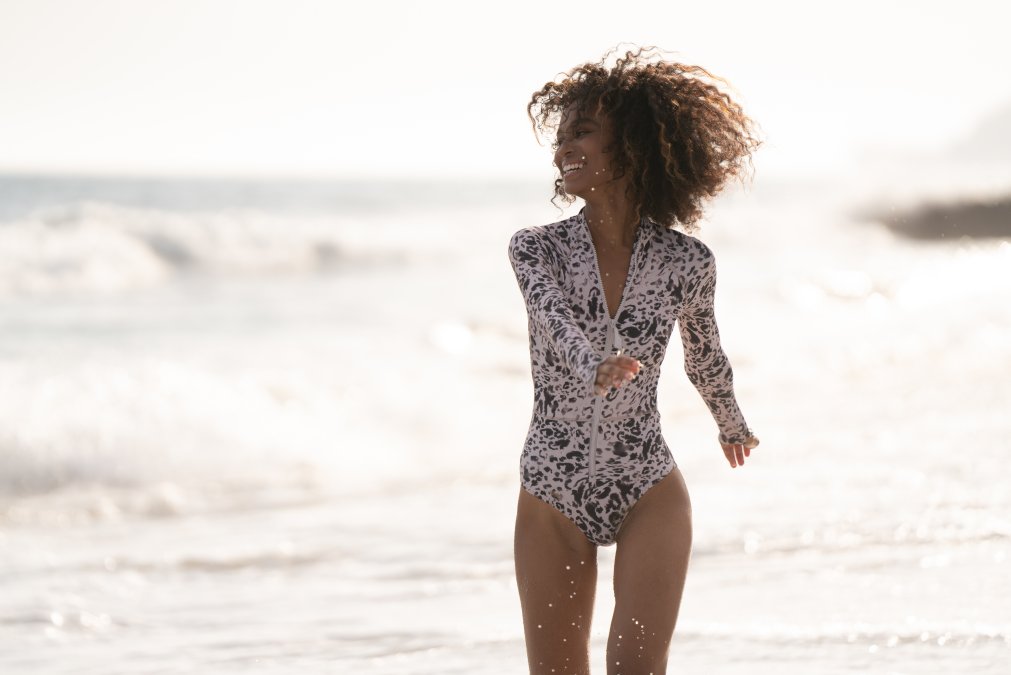
| Product | Price | Style | Best For |
|---|---|---|---|
| Women's Zip Rash Guard - Aqualung | $120.00 | Zip, long sleeve | Paddleboarding, beach days |
| Men's Pullover Rash Guard - Blue Rock | $95.00 | Pullover, long sleeve | Surfing, prone paddling |
| Women's Pullover Rash Guard - Black Cat | $65.00 | Pullover, long sleeve | Snorkeling, swimming |
| Women's Zip Rash Guard - Black Cat w/ White Zipper | $130.00 | Zip, long sleeve | Layering, all-day wear |
| Women's Zip Rash Guard - In The Pink | $65.00 | Zip, long sleeve | Budget-conscious buyers |
UPF 50+ Fabric Technology Explained
UPF 50+ fabric blocks at least 98% of ultraviolet radiation, and the rating is woven into the fabric itself rather than added as a coating. Coatings wash out; fabric structure does not.


TUTUBLUE engineers its rash guards with Ultra Light Neoprene Scuba Fabric and CHLORATEK technology, which the brand states blocks 97% of harmful UVA and UVB rays, staying lightweight in warm water while holding its sun-shielding properties across repeated wear.
Here is what most shoppers miss: a UPF rating is not the same as SPF. SPF measures how long sunscreen delays a burn on skin. UPF measures how much UV radiation passes through a fabric. A UPF 50 shirt is a physical barrier, not a chemical one, which is why dermatologists often steer sun-sensitive patients toward sun-protective clothing instead of relying on reapplication alone. The Skin Cancer Foundation guidance on sun-protective clothing explains how clothing ratings differ from sunscreen ratings.
How to Choose a Rash Guard for Snorkeling
Choosing a rash guard for snorkeling comes down to three things: coverage, fit, and how it behaves in saltwater. Get those right and you can stay face-down for an hour without thinking about your gear. Get them wrong and you will be adjusting, chafing, or burning.
Snorkeling keeps you face-down and stretched out for long stretches. A pullover with a high collar protects your chest and back without a zipper pressing into your stomach. Thumb holes extend coverage over the backs of your hands, an area snorkelers routinely forget and then burn. The American Academy of Dermatology sun protection advice recommends covering up with clothing as one of the most reliable ways to limit UV exposure, which is exactly what a well-fitted rash guard does.
Fit: the difference between protection and a false sense of security
Fit should be snug but not restrictive. A rash guard that rides up defeats the purpose, because exposed skin gets no protection. Look for four-way stretch and flatlock seams, which reduce chafing during repeated arm movement. Test your range of motion before you get in the water: reach both arms overhead, twist at the waist, and simulate a fin kick. If the hem lifts above your waist or the sleeves slide past your wrists, size down or look for a longer torso cut.
Seam construction and chafing prevention
Chafing under the arms, at the neck, and along the waistband is the most common complaint from snorkelers who wear rash guards for hours. Flatlock seams sit flat against the skin instead of rubbing, and a snug-but-flexible fit stops the fabric from bunching. If you are prone to chafing, a pullover with a smooth interior is often more comfortable than a zippered style, since there is no front hardware to press against your chest when you float prone. A high collar that sits below the mask strap line also prevents rolling and pressure points.
Saltwater behavior
Saltwater is denser than fresh water, so your rash guard will feel slightly more buoyant and may shift more as you move. Quick-dry fabric sheds water rather than holding it, so the piece dries fast between swims. Rinsing in fresh water immediately after every snorkel removes salt crystals before they can abrade the fabric.
Women's Zip Rash Guard - Aqualung →
For snorkeling specifically, prioritize:
- Long sleeves with thumb holes for full arm and hand coverage
- A high collar that shields the chest and upper back without interfering with a mask strap
- Flatlock seams to prevent rash under the arms and at the neck
- Four-way stretch so the suit moves with you, not against you
- Quick-dry fabric so you are not sitting wet between swims
Full Coverage Sun Protection Swimwear Options
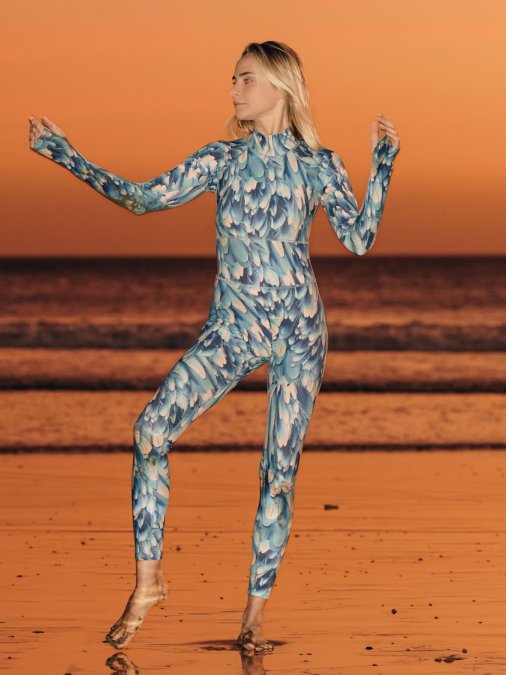
Full coverage sun protection swimwear extends protection past the torso, and that is where the difference between a basic swim shirt and a performance piece shows up.
TUTUBLUE's zip rash guards can be worn fully zipped for complete arm, chest, and back coverage, or unzipped as a light layer, so one piece works from the drive to the beach to the water. We love to pair it with our high waisted leggings and shorts.
Zip vs. Pullover Styles: Which UPF 50 Rash Guard Fits Your Activity?
The zip versus pullover decision is simple: zip for flexibility, pullover for simplified movement.
Zip rash guards let you control coverage on the fly, worn open as a light jacket or zipped fully for maximum protection.
| Feature | Zip Rash Guard | Pullover Rash Guard |
|---|---|---|
| Coverage control | Adjustable, wear open or closed | Fixed, full coverage |
| Best activity | Paddleboarding, beach, travel | Surfing, prone paddling |
| Front hardware | Zipper | None |
| Layering | Works as a light jacket | Snug base layer |
Durability, Care, and Chlorine Resistance
Chlorine and saltwater quietly destroy cheap rash guards: chlorine breaks down inferior elastic fibers, and salt crystals abrade fabric over time. A rash guard that loses its shape loses its fit, and a loose fit means exposed skin.
- Rinse in cool fresh water immediately after every swim
- Skip the washing machine on high heat, which stresses elastic fibers
- Lay flat to dry rather than hanging by the shoulders
- Avoid fabric softener, which coats fibers and can reduce performance
Environmental Impact and Skin Sensitivity Considerations
Skin sensitivity: why fabric beats lotion
Environmental impact: the materials question
Frequently Asked Questions
What is the best sun protection rash guard?
The best rash guard for sun protection carries a UPF 50+ rating, which blocks 97% of UVA and UVB rays. Look for full coverage designs with high collars, long sleeves, and thumb holes. TUTUBLUE's rash guards use Ultra Light Neoprene Scuba Fabric and CHLORATEK technology to maintain protection through repeated wear and washing. Choose a style that matches your activity, like zip fronts for paddleboarding or pullovers for surfing.
Does a rash guard provide better sun protection than sunscreen?
A UPF 50+ rash guard offers consistent, measurable protection without reapplication. Sunscreen wears off with sweat and water, and most people apply less than the tested amount. A high performance UPF 50 rash guard offers consistent UV protection as long as you wear it. For extended water sports or full-day beach trips, combining a rash guard with sunscreen on exposed areas gives the most reliable coverage.
Should a high-performance rash guard fit tight or loose for water sports?
For water sports, a snug compression fit works best. It stays in place during paddling, surfing, or snorkeling and prevents fabric from bunching or riding up. TUTUBLUE's pullover rash guards are designed to fit close to the body so you forget you're wearing them. Zip styles offer flexibility: wear them fitted for swimming or slightly relaxed as a light jacket between activities.
Are all UPF 50+ rash guards chlorine resistant?
No. Chlorine breaks down many fabrics over time, reducing both stretch and UV protection. Look for chlorine-resistant technology like CHLORATEK, which helps the fabric hold its UPF rating through repeated pool sessions. Rinse your rash guard in fresh water after every swim and air dry it away from direct sunlight to extend the life of the fabric and maintain its sun-shielding performance.
How do I maintain the UPF rating of my rash guard over time?
Rinse your rash guard in cool fresh water after each use to remove salt, chlorine, and sunscreen residue. Hand wash with mild soap and avoid fabric softeners, which can coat fibers and reduce moisture-wicking. Air dry flat or hang in the shade. Never wring or machine dry on high heat. With proper care, a quality UPF 50 rash guard keeps its sun-protective properties for multiple seasons.


Leave a comment