




Durable Sun Protective Swimwear for Active Kids

Table of Contents
- What Makes Sun Protective Swimwear Last Through a Summer of Play
- Quick Comparison: Long Suits, Short Suits, and Rash Guards
- How We Evaluated This Kids UPF 50+ Swimwear
- Full-Body Long Suits for All-Day Coverage
- Short Suits and Durable Kids Rash Guards for Water Play
- How to Wash UPF Swimwear So Protection Lasts
- Fit, Movement, and Sizing for Active Kids
- Frequently Asked Questions
Last Updated: October 15, 2026
What Makes Sun Protective Swimwear Last Through a Summer of Play
The sun-protective swimsuit market is projected to reach USD 4.22 billion in 2026 and USD 7.49 billion by 2035, growing at a 6.5% compound annual growth rate, according to Business Research Insights' Sun Protective Swimsuit Market Forecast 2026-2035. That growth reflects a shift in how families think about sun safety: they want gear that works, not just gear that exists.

Here's the core problem most parents run into: a swimsuit can carry a UPF 50+ label and still lose its protective value after a few months of heavy use. Fabric degrades. Seams fray. Stretch gives out. Below, we break down what actually determines durability, how to compare long suits against short suits and rash guards, and how to wash UPF swimwear so the rating holds up wash after wash.
UPF 50+ and How It Blocks UVA and UVB Rays
UPF 50+ is a fabric rating that blocks 98% or more of ultraviolet radiation, including both UVA and UVB rays. The number describes how much UV passes through the material, not how much sunscreen you applied.
That distinction matters because UVA and UVB do different damage. UVB rays cause sunburn and play a direct role in skin cancer development. UVA rays penetrate deeper, drive premature aging, and pass through glass. A suit rated only for one type of ray leaves a gap.
TUTUBLUE's UPF 50+ swimwear is engineered to block 97% of harmful UVA and UVB rays using Ultra Light Neoprene Scuba Fabric and CHLORATEK technology. The protection is built into the fabric itself rather than added as a coating, which is why the rating does not wash out or degrade.
Why Fabric Construction Decides Durability
Fabric construction determines whether a suit survives one summer or three. Two suits can carry identical UPF ratings and behave completely differently after 30 washes.
The variables that matter:
- Fiber blend: Nylon-spandex blends balance stretch and strength; SwimZip's description of its main swimwear fabric notes this blend is chosen to balance durability, stretch, and sun protection.
- Knit density: Tighter knits block more UV and resist snagging.
- Seam type: Flatlock seams lie flat against skin and resist chafing during long wear. Standard overlock seams create ridges that rub and fail faster.
- Chlorine resistance: Pool chemicals break down elastane over time. Chlorine-resistant fabric holds its shape longer.
A common mistake is buying on print and price alone. What most guides miss is that the cheapest suit often costs more per season, because you replace it twice.
Quick Comparison: Long Suits, Short Suits, and Rash Guards
Each style solves a different coverage problem, but the real difference shows up after repeated swimming, washing, and sun exposure. Long suits cover neck to ankle. Short suits cover neck to knee. Rash guards cover the torso and arms but leave legs exposed.
| Style | Coverage | Price | Best For | Durability Notes |
|---|---|---|---|---|
| Long suit | Neck to ankle | $95.00 | All-day sun, beach, high UV | More fabric to rinse and dry; ankle cuffs and wrist seams take the most abrasion from sand and pool decks |
| Short suit | Neck to knee | $85.00 | Pool play, warm water, easy movement | Less fabric means faster drying and fewer seams to stress, but knees and lower legs need sunscreen |
| Rash guard | Torso and arms | Varies by piece | Layering over other swimwear | Often the first piece to lose shape because it is pulled on and off repeatedly; check hem and sleeve seams |
A common pattern is that families buy one long suit for beach days and one short suit for pool days, then rotate them. That rotation matters for durability: giving each suit a full dry cycle between wears reduces the chlorine and salt load on the fibers. It also makes it easier to inspect seams and cuffs before they fail.
How We Evaluated This Kids UPF 50+ Swimwear
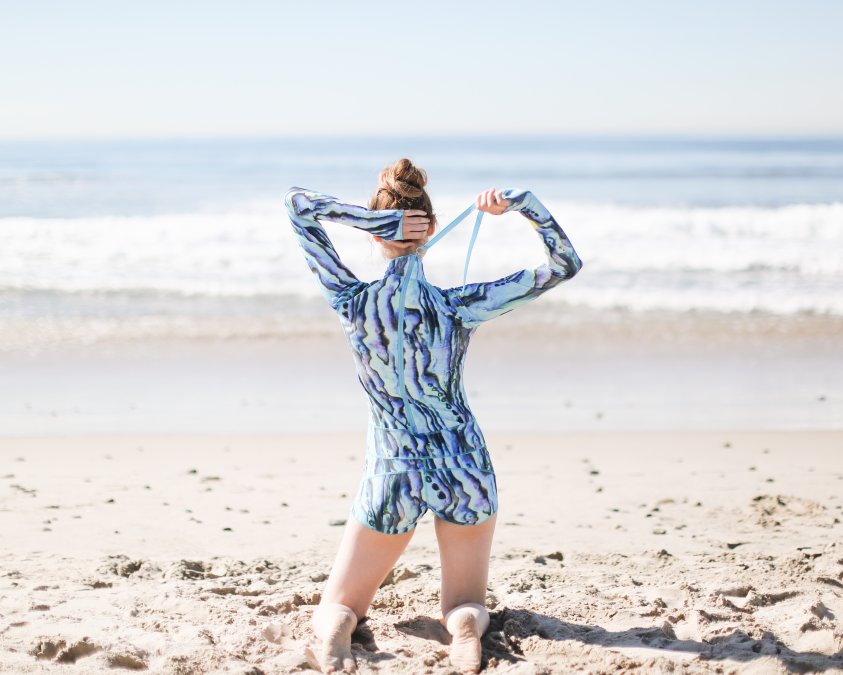
We judged each suit on four criteria: verified UPF 50+ protection, fabric durability under chlorine and saltwater, freedom of movement, and how easy the suit is for a child to put on alone. Coverage came first. A suit that protects the neck and arms but leaves the shoulders exposed creates a burn risk right where straps sit.
Practical details separated the finalists. Back zips let kids dress themselves. Thumb holes keep sleeves in place during water play. Four-way stretch means the suit moves with a cannonball, not against it.
One honest limitation: full-coverage suits cost more upfront than a basic drugstore rash guard. The tradeoff is that you are not buying sunscreen by the gallon or replacing stretched-out fabric every few months.
Full-Body Long Suits for All-Day Coverage
Our top pick for maximum protection is the Girl's Long UPF 50+ Sun-Protective Swimsuit - Droplets at $95.00.
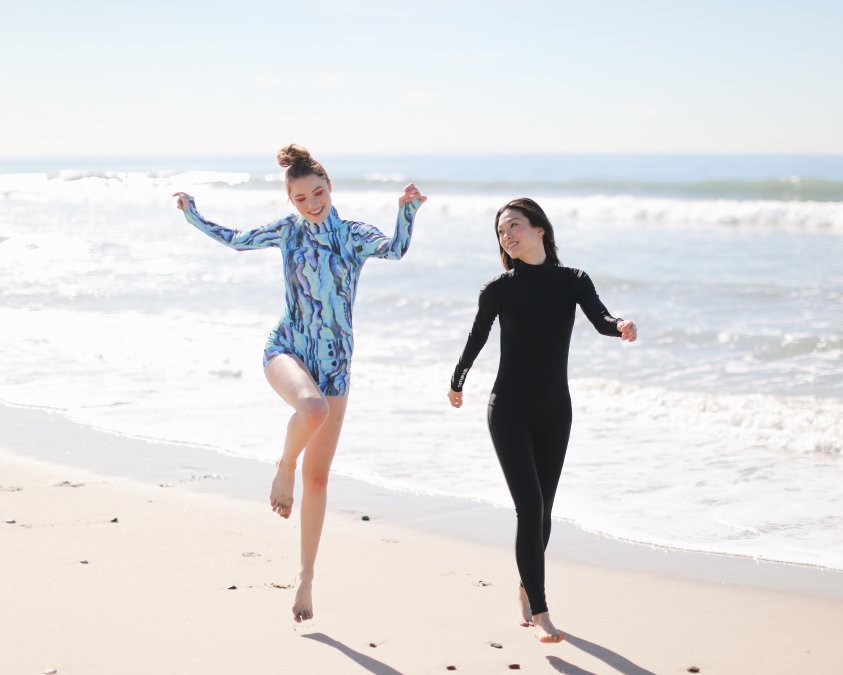
What sets it apart is the construction. Quick-dry technology means the suit is ready for the next activity in minutes, not hours. Four-way stretch allows unrestricted movement in and out of water.
The same build comes in Pink Camo, Cherry Skies, and Flower Power, all at $95.00.


Where it falls short: ankle-length coverage runs warmer than a short suit, so it suits long beach days better than a quick indoor swim.
Girl's Long UPF 50+ Sun-Protective Swimsuit - Droplets →
Short Suits and Durable Kids Rash Guards for Water Play
For kids who want more leg freedom, the short suit covers neck to knee with the same UPF 50+ protection and long sleeves. Our pick is the Girl's Short UPF 50+ Sun-Protective Swimsuit - Neon Pink at $85.00. The neon color makes your child easy to spot in the water, which matters at a crowded pool.
The short suit line also includes Flower Power, Cherry Skies, Pink Camo, and Droplets, all at $85.00.
For boys, the Boy's Short Body Swimsuit - Blue Camo at $85.00 delivers full arm, chest, and back coverage with a high collar and thumb holes. The listing notes the suit has a couple of inches of stretch, so sizing down may be the better call.
How to Wash UPF Swimwear So Protection Lasts
Washing UPF swimwear correctly means rinsing it in cool water after every use and skipping the dryer entirely. Heat and harsh detergents break down the elastic fibers that hold the fabric's knit tight, and a looser knit lets more UV through. That is the mechanism most care guides skip: UPF is not a coating that washes off in one cycle. It is a property of how tightly the yarns are woven or knit and how much stretch the fabric retains.
Follow this routine:
- Rinse in cool water immediately after swimming to remove chlorine and salt
- Hand wash or use a gentle cycle with mild detergent
- Skip fabric softener, which coats fibers and reduces stretch
- Lay flat or hang to dry in shade, never in direct sun
- Avoid wringing, which stretches seams
- Store dry, away from heat
What changes UPF over time:
- Wet fabric: Most swimwear loses some protection when saturated because water fills the gaps between fibers and reduces scattering. A suit that is UPF 50+ dry may test lower when wet, which is why fit and coverage matter as much as the label.
- Stretch: Pulling a suit over hips and shoulders repeatedly stresses the knit. Areas that stretch the most, necklines, armholes, and hems, are where coverage gaps appear first.
- Chlorine and salt: Both degrade elastane. Rinsing immediately is the single highest-impact habit for extending the life of the rating.
- Abrasion: Sand, pool decks, and Velcro closures rub against fabric. Flatlock seams and smooth zips reduce the friction that thins yarns.
A study indexed by PubMed Central on sun-protective clothing worn during early childhood documented an intervention in which children at 13 childcare centers wore study garments and legionnaire hats at childcare and received sun-protective swimwear and hats for home use, showing how routine protective clothing fits into daily care.
Fit, Movement, and Sizing for Active Kids
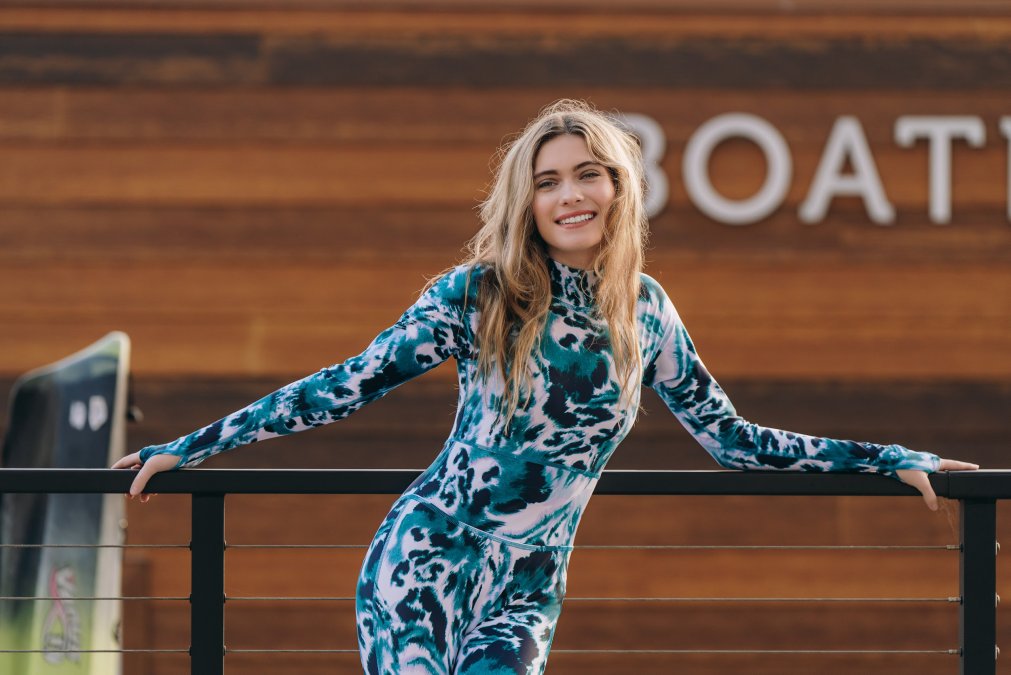
Fit is where coverage and comfort collide. A suit that is too tight restricts movement and stresses seams. Too loose and it shifts, exposing skin mid-activity.
Check these points before buying:
- Neck: Should sit close without gaping when arms raise
- Sleeves: Should reach the wrist and stay there through arm movement
- Torso: Snug but not compressive, with room to bend and twist
- Legs: Should not ride up during kicks or climbs
For kids with sensory sensitivities, flatlock seams and tag-free construction reduce the scratch factor that makes children tug at their suits. If a child is uncomfortable, they will peel the suit off, and protection goes with it.
One more point on the full picture: Lands' End's 2026 guidance on kids' swimwear recommends pairing UPF-rated swimwear and rash guards with wide-brim hats and water-resistant sunscreen during peak sun hours. Swimwear is the foundation, not the whole strategy.
Protecting an active kid from the sun takes gear that holds up as well as they do.
Frequently Asked Questions
What does UPF 50+ mean in kids' swimwear?
UPF stands for Ultraviolet Protection Factor, and it measures how much UV radiation fabric blocks. UPF 50+ means the fabric blocks over 98% of UVA and UVB rays. That is the highest rating a garment can receive. Unlike sunscreen, which needs reapplying every couple of hours, UPF protection is built into the fabric itself and does not wash off or wear away with normal use.
Do kids need sunscreen under a rash guard?
For covered areas, no. A UPF 50+ rash guard or full-body suit blocks over 98% of UV rays on its own. Sunscreen is still needed for exposed skin like the face, hands, feet, and neck. Pair sun protective swimwear with a wide-brim hat and water-resistant sunscreen on uncovered areas during peak sun hours for complete coverage.
How should a rash guard fit for swimming and active play?
It should feel snug but not restrictive. A good fit stays in place during swimming, running, and splashing without riding up or bunching. Look for four-way stretch fabric and flatlock seams that prevent chafing. Some suits have a couple of inches of stretch, so check the size chart and consider sizing down if your child is between sizes.
How do you wash kids' UPF swimwear to help it last longer?
Rinse in cold water after every use to remove chlorine and salt. Hand wash or use a gentle cycle with mild detergent, then air dry away from direct sunlight. Skip fabric softeners and bleach, which break down stretch fibers. Never wring or tumble dry. With proper care, the UPF rating stays intact because it is built into the fabric, not applied as a coating.
How can I tell when a child's sun-protective swimsuit needs replacing?
Check for thinning fabric, visible light through the material when held up, stretched-out elastic, or seams pulling apart. These signs mean the fabric can no longer block UV rays reliably. If the suit has lost its shape or the fabric feels noticeably thinner than when it was new, it is time to replace it. Well-made suits with chlorine-resistant fabric typically hold up for multiple seasons of regular wear.


Leave a comment