




Stylish Rash Guards for Beach Vacations: 2026 Guide

Table of Contents
- Why Stylish Rash Guards Belong in Every Beach Vacation Suitcase
- Quick Comparison: Stylish Rash Guards for Beach Vacations
- 1. Women's Textured Fitted & Cropped UPF 50+ Rash Guard - Aloha
- 3. Women's Zip Rash Guard - Blue Mosaic
- How to Choose a Rash Guard That Fits Your Trip and Your Skin
- Rash Guard Fit Guide: Sizing, Coverage, and Staying in Place
- Rash Guard Outfit Ideas for Beach Days and Coastal Evenings
- Frequently Asked Questions
Last Updated: October 18, 2026
Why Stylish Rash Guards Belong in Every Beach Vacation Suitcase
The global rash guard market hit $2.8 billion in 2025 and is projected to reach $5.1 billion by 2034, according to Dataintelo's rash guards market research.

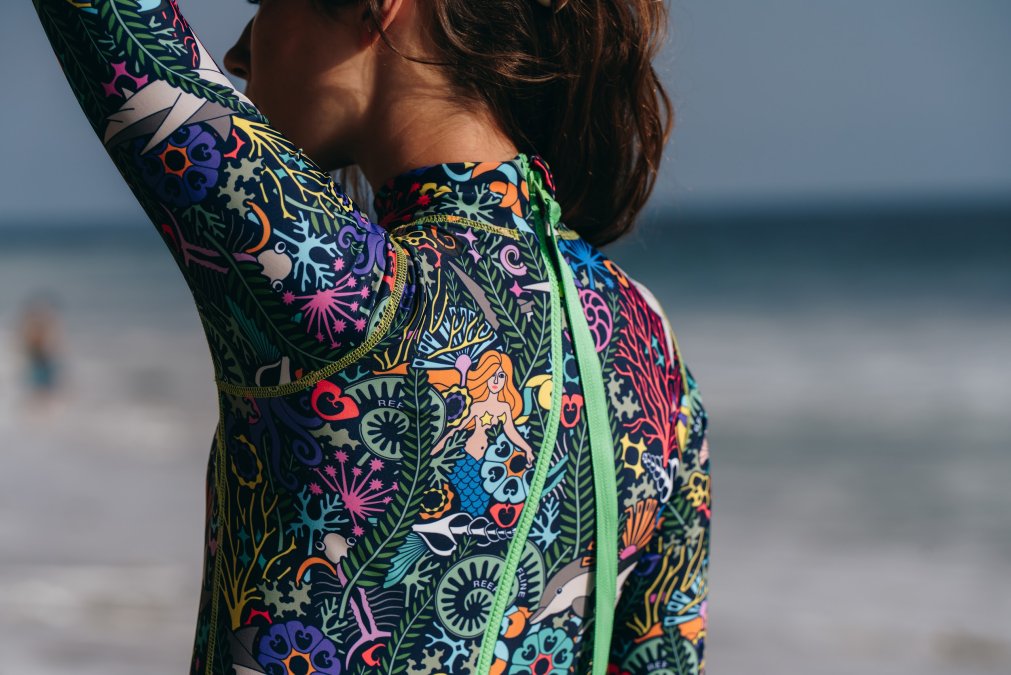
Here's the tension most packing guides skip. A rash guard is a swim shirt, a layer, and an outfit in one garment.
Below, we break down three TUTUBLUE picks, then show you how to choose, fit, and style them for a real beach vacation.
Quick Comparison: Stylish Rash Guards for Beach Vacations
| Style | Price | Best For | Key Feature |
|---|---|---|---|
| Aloha Cropped Rash Guard | $100 | Tropical trips, statement swimwear | UPF 50+, recycled textured fabric |
| Sea Poppy Pink Cropped Rash Guard | $100 | Bright beach days, family photos | UPF 50+, cropped long sleeve |
| Blue Mosaic Zip Rash Guard | $130 | Versatile coverage, beach-to-town | Zip front, wear open or closed |
All three block harmful UV rays with UPF 50+ protection and use recycled fabric. The pullover styles suit swimming and snorkeling. The zip style adds flexibility for paddle boarding and layering.

1. Women's Textured Fitted & Cropped UPF 50+ Rash Guard - Aloha
Our top pick for a beach vacation is the Aloha Cropped Rash Guard ($100).
The cropped, long-sleeve cut covers your arms and shoulders while pairing cleanly with high-waisted swim bottoms.
What we'd change: the cropped length leaves your midsection exposed, so pair it with high-rise bottoms if you want fuller coverage.

Function matches the look. This fitted, long-sleeve rash guard delivers UPF 50+ coverage and contours to the body for a flattering silhouette. The recycled textured fabric stays comfortable through a full day of swimming and snorkeling.
3. Women's Zip Rash Guard - Blue Mosaic
The Blue Mosaic Zip Rash Guard ($130) is the most versatile piece here. Zip it up for full arm, chest, and back protection at the beach, or wear it open as a light jacket over your swimsuit.

That flexibility earns its price. Keep it in the car to shield your arms on the drive over, then zip up when you hit the sand.
How to Choose a Rash Guard That Fits Your Trip and Your Skin
Choosing a rash guard comes down to three decisions: sleeve length, coverage level, and fabric. Long-sleeve styles maximize sun protection, while Billabong's rash guard sizing guide notes that short-sleeve styles focus coverage on the chest, shoulders, and back and suit warmer climates.
Ask yourself:
- How active will you be? Surfing and paddle boarding reward a fitted, stays-in-place cut. Lounging favors a looser layer.
- How much sun exposure do you get? Long sleeves and UPF 50+ matter most for fair skin and long beach days.
- Do you want one piece or two? A zip style transitions from water to town; a cropped pullover is simpler for pure swim days.
A common mistake is buying for looks alone. Check the UPF rating and fabric before the print.
Rash Guard Fit Guide: Sizing, Coverage, and Staying in Place
A good rash guard fits snug but not tight, think compression without restriction.
How to measure for a rash guard
Use a soft tape measure over a swimsuit, not street clothes:
- Bust: Measure around the fullest part, keeping the tape level under your arms.
- Waist: Measure at your natural waist, the narrowest point above your hip bones.
- Torso length: Measure from the top of your shoulder, over the fullest part of your bust, down to your hip bone. This number matters more than height for cropped versus full-length styles.
- Sleeve length: Measure from your shoulder point to your wrist bone for long-sleeve styles.
Compare those numbers to the size chart, and size to your largest measurement.
Fit by body type and torso length
- Long torso: Cropped styles may sit higher than expected. Look for a cropped rash guard with a longer hem, or choose a full-length or zip style and tuck the hem into high-rise bottoms.
- Short torso: Cropped styles land closer to the waist, which pairs naturally with high-rise swim bottoms without excess fabric.
- Fuller bust: Look for a scoop or higher neckline with enough room through the chest; zip styles let you adjust coverage at the neck without pulling the shoulder seams.
- Narrow shoulders or athletic build: Fitted pullovers contour best; a looser cut can gap at the armholes and rub during paddling.
Coverage and staying in place
Women's Textured Fitted & Cropped UPF 50+ Rash Guard - Sea Poppy Pink →
- Snug through the torso so fabric doesn't bunch or balloon in the water.
- Full shoulder mobility for paddling, surfing, and snorkeling.
- Cropped styles pair best with high-rise bottoms for continuous coverage; check the hem against your swim bottom waistband before you pack.
- Zip styles let you adjust coverage on the fly and are easier to get on and off when wet.
Chafing and board rash
Board rash comes from loose fabric or seams rubbing against skin during repeated movement, paddling, pop-ups, or snorkeling.
Breathability and heat
Rash guards can feel warm on hot beach days, a tradeoff swimmers discuss in this Reddit thread.
Rash Guard Outfit Ideas for Beach Days and Coastal Evenings
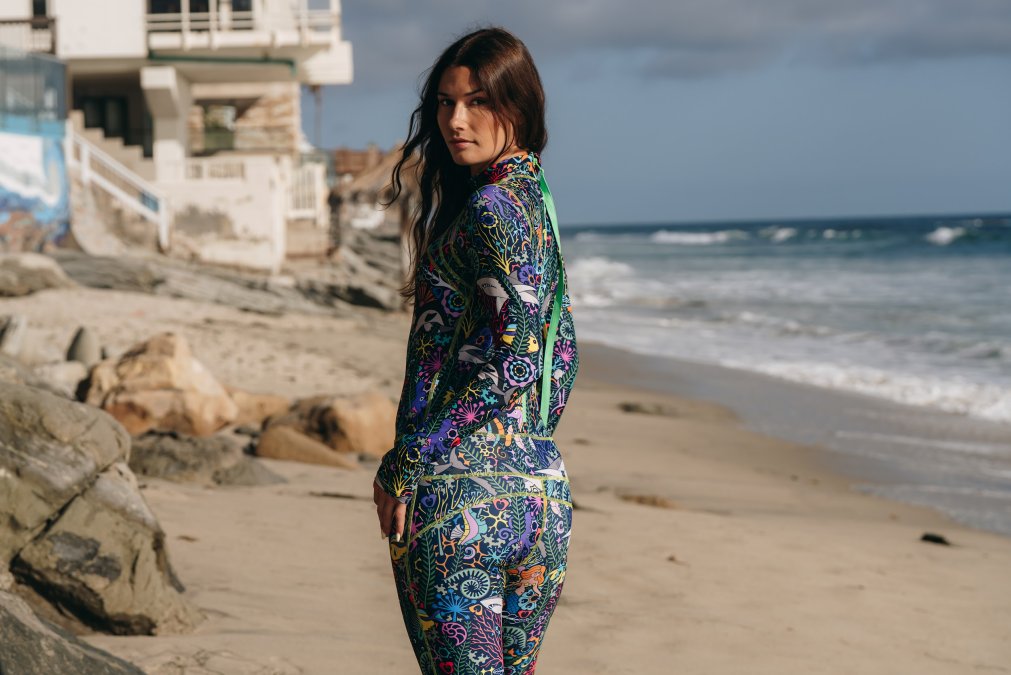
Stylish rash guards work far beyond the water. Treat yours as a swim top and a layering piece, and a single garment covers most of your vacation wardrobe.
Beach-to-town outfit formulas
- Beach day: Cropped rash guard + high-waisted swim bottoms + woven tote + slide sandals. The cropped cut keeps you cool on the sand; high-rise bottoms close the coverage gap.
- Boat or paddle board: Zip rash guard zipped up + high-rise shorts + water shoes. Zip it down for the ride back.
- Coastal evening: Zip rash guard worn open over a swimsuit or tank + linen pants + flat sandals. The zip style reads as a light jacket, not athletic gear.
- Sunny walk or market: Rash guard + flowy midi skirt + straw hat. A fitted pullover tucks cleanly into a skirt waistband.
- Snorkel or dive day: Fitted long-sleeve rash guard + swim bottoms under a wetsuit or worn alone in warm water. The snug fit prevents fabric from ballooning underwater.
Packing logic: how many rash guards for your trip
A practical rule is one rash guard per two water days, plus one layering piece:
- Weekend trip (2-3 days): One cropped pullover for swim days and one zip style for layering. That covers the beach, the boat, and the evening walk.
- Week-long trip: Two cropped pullovers (one neutral, one bright) and one zip style. Rotate them so each has a day to dry.
- Activity-heavy trip: Add a fitted long-sleeve for surfing or snorkeling if you'll be in the water daily; the snug cut stays in place through repeated paddling.
Choosing sleeve length and coverage for your destination
- Tropical, high-UV destinations: Long sleeves and UPF 50+ matter most for fair skin and long beach days. A cropped long-sleeve balances coverage with heat.
- Warm-water snorkeling: A fitted long-sleeve protects arms and back from sun and minor scrapes without a wetsuit.
- Cooler coastal water or windy boat days: A zip style layers over a swimsuit and blocks wind; zip it up when the boat picks up speed.
- Mixed beach-and-town itineraries: The zip style earns its place because it works open as a jacket and closed as sun protection.
Care, drying, and travel durability
Rash guards are built for repeated wear, but salt, sunscreen, and chlorine shorten their life if you don't rinse them. A simple travel routine:
- Rinse after every swim in fresh water, salt and chlorine degrade stretch fibers over time.
- Wash cold with mild detergent, and skip fabric softener, which coats the fibers and reduces breathability.
- Hang to dry in shade. Rash guards dry fast, but direct sun breaks down the fabric and fades prints.
- Pack a damp bag. A small waterproof pouch keeps a wet rash guard from soaking the rest of your suitcase between swims.
Balancing sun protection with heat and comfort
UPF 50+ blocks most UV rays, but fabric weight and fit determine how hot a rash guard feels. Lightweight, quick-drying fabric with a fitted cut ventilates better than a loose, heavy top.
Frequently Asked Questions
What should you look for in a rash guard for a beach vacation?
Start with the UPF rating: UPF 50+ is the highest protection level and blocks the most UV radiation. Look for long sleeves and a cropped or full-length cut that covers the shoulders, arms, and back. Check the fabric description for breathability and stretch, since you will wear it in and out of the water. A fitted silhouette that stays in place during swimming and snorkeling matters more than a loose fit. Finally, pick a print or color you would actually wear to lunch after the beach, so the piece earns its suitcase space.
How should a rash guard fit for swimming and beach days?
A rash guard should sit close to the body without squeezing. The fit guide rule: it should feel snug across the chest and shoulders but let you raise your arms fully without the hem riding up. Cropped styles pair best with high-waisted bottoms, while zip styles let you loosen the front when you are out of the water. If you are between sizes, size up for breathability in hot climates. A fitted rash guard that stays in place during paddling and snorkeling prevents chafing and board rash.
Are rash guards stylish enough to wear beyond the water?
Yes, when you choose the right cut and print. Cropped long-sleeve rash guards in textured recycled fabric pair with high-waisted shorts or leggings for a beach-to-town look. A zip rash guard worn open works as a light layer over a swimsuit for the drive home or a walk along the shoreline. Tropical prints, bright pinks, and soft neutrals read as fashion, not just function. The key is treating the rash guard as a swim top you style, not a piece you hide under a towel.
Do rash guards protect against UV rays?
Rash guards with a UPF rating block UV radiation through the fabric itself, unlike sunscreen that needs reapplying. UPF 50+ is the top rating and blocks the vast majority of UVA and UVB rays. TUTUBLUE's rash guards are engineered with Ultra Light Neoprene Scuba Fabric and CHLORATEK technology to block 97% of harmful UVA/UVB rays. Coverage matters too: long sleeves and a cropped or full torso cut protect more skin than a short-sleeve swim top. Pair the rash guard with sunscreen on exposed areas like the face and hands.
Can you wear a rash guard for swimming and snorkeling?
Yes. Rash guards are built for water sports, and a fitted long-sleeve style works well for swimming, snorkeling, paddle boarding, and surfing. The fabric stays in place during movement, which reduces chafing and board rash. Look for lightweight, quick-drying material so the piece does not feel heavy when you leave the water. TUTUBLUE's textured recycled fabric is designed for breathability in warm weather, so you can wear it through a full beach day and into a boat ride without overheating.
Your beach vacation deserves sun protection you'll actually want to wear. TUTUBLUE offers UPF 50+ rash guards engineered to block 97% of harmful UVA/UVB rays, built with Ultra Light Neoprene Scuba Fabric and CHLORATEK technology, and designed with the style that keeps them in your suitcase trip after trip. Get started with TUTUBLUE and enjoy the sun with confidence.


Leave a comment