




Best Full Coverage Swimsuits for Melanoma: 2026 Guide

Table of Contents
- What UPF 50+ Really Means for Melanoma Protection
- Quick Comparison: Best Full Coverage Swimsuits for Melanoma
- 1. TUTUBLUE Classic Long Swimsuit: Best Overall for Full-Body Coverage
- 2. Best Rash Guards for Melanoma Patients: TUTUBLUE's High-Collar Protection
- Benefits of Chlorine-Resistant Swimwear for Pool and Ocean
- How to Care for UPF Fabric So It Lasts
- How to Choose the Right Full Coverage Swimsuit for Your Needs
- Frequently Asked Questions
Last Updated: September 28, 2026
What UPF 50+ Really Means for Melanoma Protection
Most skin cancers are caused by excessive exposure to ultraviolet (UV) rays, according to the Centers for Disease Control and Prevention sun safety guidance. That single fact explains why this guide from TUTUBLUE focuses on fabric ratings rather than sunscreen alone. Ultraviolet Protection Factor (UPF) is a laboratory-measured rating of how much UV radiation a fabric blocks before it reaches your skin. A UPF 50+ garment blocks 98% of harmful UV rays, the highest rating available.
UPF vs SPF: What's the Difference?
UPF rates fabric; SPF rates lotion. They are not interchangeable.
- SPF measures how long sunscreen delays sunburn on exposed skin, and it must be reapplied every two hours.
- UPF measures how much UV radiation passes through a fabric, and it never washes off mid-afternoon.
- UPF 30 is the minimum the Skin Cancer Foundation recommends. UPF 50+ is classified as "excellent."
Why Full Coverage Matters for Melanoma Survivors
For melanoma survivors, coverage zones matter more than overall style. Research in the 2024 International Textile and Apparel Association proceedings found that full-body swimwear provides significant protective benefits, though people choose it for both sun safety and modesty.
Quick Comparison: Best Full Coverage Swimsuits for Melanoma
Every suit below comes from TUTUBLUE's Classic Long Swimsuit line, engineered to block 97% of UVA/UVB rays with Ultra Light Neoprene Scuba Fabric and CHLORATEK technology.

| Suit | Price | Coverage Features | Best For |
|---|---|---|---|
| Royal Bouquet Pink | $175.00 | High collar, thumbholes, back zip | Best value full-body pick |
| Blue Abalone | $188.00 | Full arm, chest, back coverage | Everyday beach and pool wear |
| Banded Sea Snake | $188.00 | High collar, 4-way stretch | Active water sports |
| Deep Sea | $188.00 | Quick Dry Tech, back zip | All-day outdoor wear |
| Neon Blue Poppy | $188.00 | Thumbholes, simplified fit | Style-forward coverage |
1. TUTUBLUE Classic Long Swimsuit: Best Overall for Full-Body Coverage
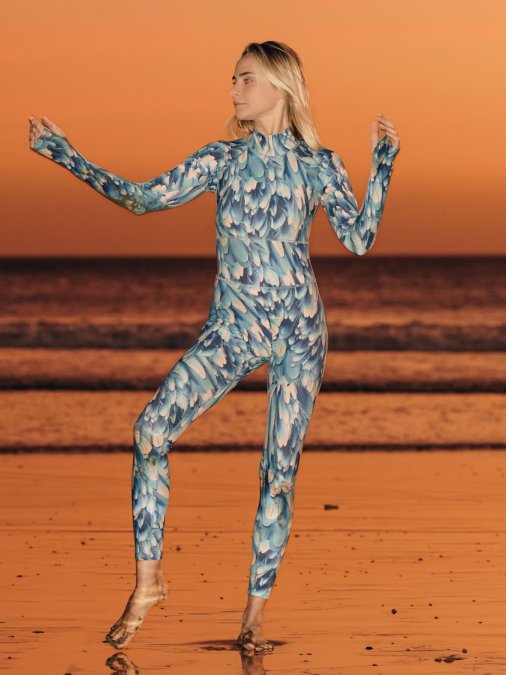
The TUTUBLUE Classic Long Swimsuit is the most protective suit in the lineup: high collar, thumbholes, complete arm, chest, and back coverage, and a long back zipper for easy on-and-off.
Why It Stands Out
Founded by Sarah Buxton after her own melanoma diagnosis, TUTUBLUE built this suit around one problem: staying in the sun all day without reapplying sunscreen every two hours. Ultra Light Neoprene Scuba Fabric with CHLORATEK technology blocks 97% of UVA/UVB rays while staying breathable, and Quick Dry Tech plus 4-way stretch keep it moving with you in and out of the water.
Key Specifications
- UPF 50+ rating with 97% UVA/UVB blockage
- High collar and thumbholes for neck and hand coverage
- Long back zipper for easy entry
- Quick Dry Tech so you are not sitting in wet fabric
- 4-way stretch for swimming, snorkeling, and paddle boarding
- Price: $188.00 (select colorways at $175.00)
2. Best Rash Guards for Melanoma Patients: TUTUBLUE's High-Collar Protection
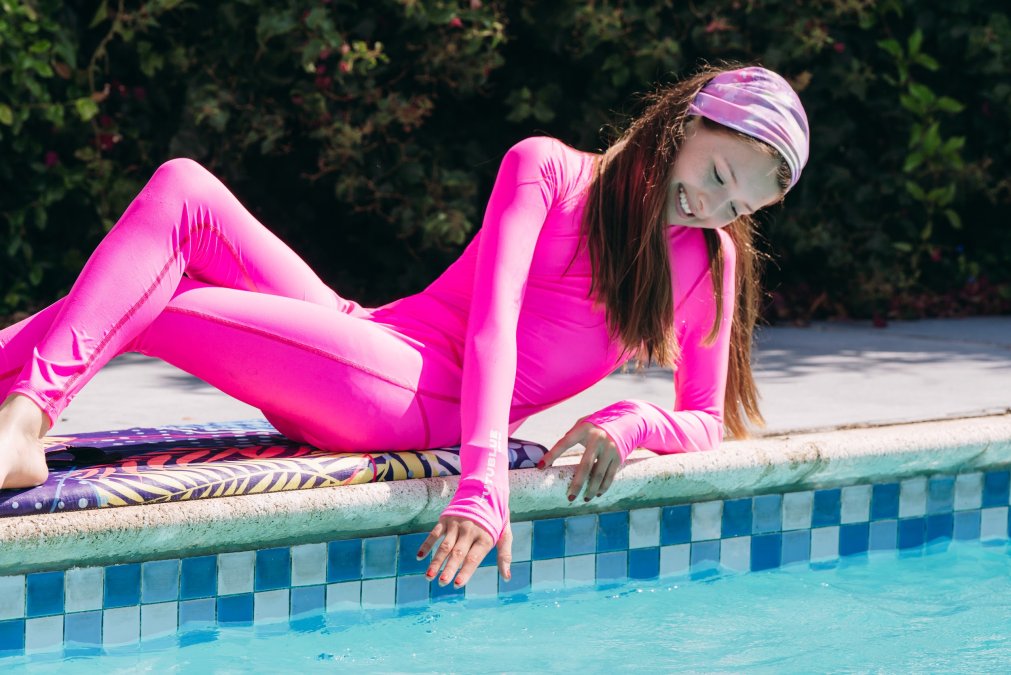
A high-collar rash guard is the most useful piece for melanoma patients who want coverage without a full suit; the collar protects the neck and upper chest, two areas dermatologists flag as commonly missed. The Classic Long Swimsuit functions as a full-body rash guard with complete arm, chest, and back coverage, so there are no exposed shoulders, no exposed back, and no mid-day reapplication ritual.
Benefits of Chlorine-Resistant Swimwear for Pool and Ocean
Chlorine and salt water do not just fade a swimsuit; they attack the fibers that block UV radiation, which is how a suit quietly stops protecting you mid-season.
How Chlorine and Salt Water Break Down UPF Fabric
Most swimwear fabrics get UV protection from the tightness of the weave or an added finish that absorbs or scatters UV rays. Chlorine is an oxidizing agent: over repeated exposure it breaks down the elastane (spandex) fibers that give a suit its stretch. When elastane degrades, the fabric relaxes, the weave opens, and more UV radiation passes through.
What the Ratings Actually Mean Over Time
A UPF 50+ rating is assigned to fabric in a laboratory, usually in a new, unstretched condition. Real-world use changes the equation. Most practitioners find that a well-made, chlorine-resistant suit holds its protective rating through roughly one to two seasons of regular pool swimming. A suit worn daily in a chlorinated pool may degrade faster. A suit used occasionally in the ocean and rinsed promptly may last longer.
Chlorine-Resistant vs. Chlorine-Proof
No swimwear fabric is truly chlorine-proof. "Chlorine-resistant" means the fabric is engineered to slow degradation through a tighter knit, higher-quality elastane, or a protective finish. CHLORATEK technology in TUTUBLUE's Classic Long Swimsuit line is one example, designed to help fabric retain its structure and UV-blocking performance across repeated pool and ocean exposure.
How to Tell If Your Suit Is Still Protecting You
- The light test: Hold the fabric up to a bright window or the sun. If you can see pinpricks of light through the weave, the coverage is compromised.
- The stretch test: Gently pull the fabric. If it feels limp or stays stretched out, the elastane is breaking down.
- The feel test: Pilling, thinning, or a slick, coated feeling can signal that a UV finish is wearing off.
- The timeline test: If you swim laps two or more times a week, plan to replace the suit after one season, regardless of how it looks.
Pool vs. Ocean: Different Stress, Same Principle
- Pool use: Chlorine is the primary threat. Rinse immediately after every swim; never let a wet suit sit in a bag.
- Ocean use: Rinse thoroughly to dissolve salt crystals before they dry in the fabric.
- Sun exposure: UV radiation weakens fibers over time, so shade-dry when possible.
- Durability: A chlorine-resistant suit with 4-way stretch recovers its shape instead of sagging, keeping the weave tight and the protection intact.
How to Care for UPF Fabric So It Lasts
Caring for a UPF suit means keeping the fabric's UV-blocking structure intact, not just keeping it looking good. That requires knowing what damages it and what dermatologists look for in sun-protective clothing.
The Three Things That Strip Protection
- Heat. Hot water and high-heat drying break down elastane fibers and degrade UV finishes; once fibers relax, the weave opens and more UV passes through.
- Harsh chemicals. Bleach, fabric softener, and some detergents leave residues that coat or break down fibers. Fabric softener is especially damaging, creating a slick coating that can interfere with UV-blocking finishes.
- Mechanical stress. Rough drying, wringing, and abrasive surfaces like concrete pool edges wear down the fabric. Pilling and thinning are early signs the protective structure is compromised.
Washing and Drying Guidelines
- Rinse in cool water immediately after every pool or ocean use. Do not wait.
- Hand wash with a mild, residue-free detergent. Avoid bleach and fabric softener entirely.
- Skip the dryer. Lay flat to air dry in shade. Sun-drying can fade colors and, over time, weaken fibers.
- Do not wring or twist the suit. Gently press water out between towels.
- Store dry. Never leave a damp suit in a bag or a closed hamper.
A Dermatologist-Informed Checklist for UPF Swimwear
Dermatologists look beyond the UPF label. Use this checklist for any full-coverage suit, including TUTUBLUE's Classic Long Swimsuit line:
- UPF 50+ rating, the highest available, blocking 98% of UV radiation.
- Coverage of commonly missed zones, neck, upper chest, hands, and forearms; a high collar and thumbholes address these directly.
- Tight but comfortable fit, loose fabric rides up and exposes skin; 4-way stretch keeps the suit in contact with the body.
- Chlorine and salt-water resistance, degraded fabric loses its rating.
- Dark or tightly woven fabric, darker colors and denser weaves block more UV than light, loose weaves.
- Minimal exposed skin, full-body coverage reduces reliance on sunscreen reapplication.
When to Replace Your Suit
Replace a UPF suit when the fabric thins, pills, or loses its stretch, or when you can see light through it held up. Most well-cared-for suits hold their rating one to two seasons; if you swim laps multiple times a week, plan on replacing it after one season.
Care Beyond the Suit
Full-coverage swimwear handles the torso, arms, and neck, but it does not cover everything. Pair your suit with a wide-brimmed hat, UV-blocking sunglasses, and sunscreen on the ears, hands, feet, and any other exposed gaps. The Centers for Disease Control and Prevention sun safety guidance recommends a combination of clothing, shade, and sunscreen for the most effective protection.
How to Choose the Right Full Coverage Swimsuit for Your Needs
Match the suit to your activity, not a generic size chart. A snorkeler needs different coverage than someone swimming laps or walking the shoreline.
- Full-body coverage: the Classic Long Swimsuit, for all-day sun
- Active water sports: prioritize 4-way stretch and a secure back zip
- Pool-focused use: look for chlorine-resistant fabric
- Style priority: the Neon Blue Poppy and Banded Sea Snake prints
- Budget priority: the $175.00 Final Sale colorways
Frequently Asked Questions
What features should I look for in a swimsuit if I have a history of melanoma?
Prioritize UPF 50+ rated fabric, which blocks 97% of UV rays. Look for full coverage of arms, chest, back, and neck, plus a high collar and thumbholes to protect hands. The Skin Cancer Foundation classifies UPF 50+ as 'excellent' protection. Choose chlorine-resistant materials if you swim in pools. TUTUBLUE's Classic Long Swimsuit offers all these features with a flattering fit.

Does UPF 50+ clothing really block all UV rays?
No fabric blocks 100% of UV rays, but UPF 50+ is the highest rating available. It blocks 97% of harmful UVA and UVB rays. The Skin Cancer Foundation considers UPF 50+ 'excellent' protection. TUTUBLUE's swimwear is engineered to block 97% of UVA/UVB rays using Ultra Light Neoprene Scuba Fabric and CHLORATEK technology. For full protection, combine UPF clothing with sunscreen on exposed areas and avoid peak sun hours.
How does chlorine affect the effectiveness of UPF swimwear?
Chlorine degrades fabric fibers over time, which can reduce UPF effectiveness and cause stretching or fading. Chlorine-resistant swimwear, like TUTUBLUE's CHLORATEK technology, maintains its UPF 50+ rating after repeated pool exposure. The benefits of chlorine-resistant swimwear include longer-lasting protection, better shape retention, and less frequent replacement. Rinse your suit in fresh water immediately after swimming to remove chlorine residue and extend its life.
How often should I replace my UPF swimwear?
Replace your UPF swimwear when you notice stretching, thinning, or fading, which signal fabric degradation and reduced UV protection. With proper care, including rinsing after each use and avoiding harsh detergents, TUTUBLUE's suits are designed for durability. If your suit no longer fits snugly or feels less opaque, it's time for a new one.
What is the difference between a rash guard and a full-coverage swimsuit?
A rash guard typically covers the torso and arms but leaves legs exposed, while a full-coverage swimsuit provides extensive protection for the body, chest, back, and neck. For melanoma patients, full coverage reduces the need for sunscreen on large areas. TUTUBLUE's Classic Long Swimsuit combines the function of a dive suit with a feminine silhouette, featuring a high collar, thumbholes, and complete arm, chest, and back coverage. Rash guards are better for short water activities; full suits suit all-day sun exposure.


Leave a comment