




Buy Chlorine Resistant Sun Protective Gear: 2026 Guide

Table of Contents
- Why Chlorine Destroys Ordinary Sun Protective Gear
- Quick Comparison: Chlorine Resistant Sun Protective Gear
- The Benefits of CHLORATEK Technology for Pool and Ocean Wear
- Full-Body Long Swimsuits: Maximum Coverage for All-Day Sun
- Knee-Length Biker Swimsuits for Pool Laps and Water Sports
- How to Care for Chlorine Resistant Swimwear So It Lasts
- How to Choose the Right Suit for Your Water Activities
- Frequently Asked Questions
Last Updated: October 2, 2026
Why Chlorine Destroys Ordinary Sun Protective Gear
If you buy chlorine resistant sun protective gear, you're solving a problem most shoppers don't know they have. Standard swim fabric is built to look good for a season, not to survive hundreds of hours in treated pool water. Chlorine is an aggressive oxidizer, and it attacks the elastic fibers and dyes that hold ordinary swimwear together.
The damage shows up in stages. First the color fades, especially in bright prints and dark solids. Then the fabric loses its stretch and recovery, so a suit that fit well in June sags by August. Because sun protection depends on fabric density and weave tightness, a suit that thins out also protects less. That's why a stretched-out rash guard can leave you exposed even though the original label said UPF 50+.
What's actually happening at the fiber level. Most swimwear relies on spandex (elastane) for stretch. Chlorine breaks the polymer chains in spandex through oxidation, which is why the fabric goes limp before it goes thin. Polyester and nylon are more resistant, but chlorine still attacks the dye sites in those fibers, causing the color loss you see first. A suit labeled "chlorine resistant" typically uses a higher percentage of polyester or a chlorine-stabilized spandex blend, plus solution-dyed or color-locked yarns that hold pigment deeper in the fiber rather than on the surface.
How to test chlorine resistance at home. You can't replicate a commercial pool's sanitizer levels in a sink, but you can run a rough comparison. Cut a small swatch from an old suit and a new chlorine-resistant suit, soak both in a bucket of water with a capful of household bleach for 24 hours, then rinse and air-dry. Check for three things: color shift, stretch recovery (pull and release), and whether the fabric feels thinner or rougher. A chlorine-resistant fabric will hold its color and snap back closer to its original shape. This isn't a lab test, but it will show you the difference between a treated fabric and an untreated one before you commit a full season to it.
Why this matters for sun protection. UPF ratings are measured on new, unstretched fabric. Once the weave loosens, UV rays pass through the gaps. A suit that started at UPF 50+ can drop well below that after a season of chlorine exposure, even if it still looks intact. That's the hidden cost of buying a standard suit for pool swimming.
TUTUBLUE was founded by Sarah Buxton after a melanoma scare, and the brand's whole approach to swimwear starts from that reality. This guide breaks down what actually holds up in chlorinated water, what to look for, and how to make a suit last.
Quick Comparison: Chlorine Resistant Sun Protective Gear
Here's how TUTUBLUE's chlorine-ready pieces compare at a glance.
| Suit | Coverage | Key Feature | Price | Best For |
|---|---|---|---|---|
| Classic Full Body Long Swimsuit | Full body, high collar, thumbholes | CHLORATEK fabric technology | $188.00 | All-day sun, ocean and pool |
| Knee-Length Biker Swimsuit | Knee-length, front zip | Chlorine-resistant fabric | $165.00 | Pool laps and water sports |
Both suits block 97% of harmful UVA/UVB rays with UPF 50+ protection and use Quick Dry Tech with 4-way stretch.

The Benefits of CHLORATEK Technology for Pool and Ocean Wear
CHLORATEK is TUTUBLUE's fabric technology engineered specifically to resist chlorine damage while keeping UPF 50+ protection intact. It pairs with Ultra Light Neoprene Scuba Fabric to block 97% of harmful UVA/UVB rays without the bulk of a traditional dive suit.
The practical difference shows up over time. A chlorine resistant suit keeps its weave tightness and colorfastness longer, which means the UV blockage percentage stays closer to what the label promises. It also holds shape better, so stretch and recovery don't collapse after a few months of laps.
Full-Body Long Swimsuits: Maximum Coverage for All-Day Sun
The full-body long swimsuit is the highest-coverage option for anyone who burns easily or wants to skip reapplying sunscreen to their arms, back, and legs. TUTUBLUE's Classic silhouette combines the function of a sleek dive suit with the fit of a modern unitard, in colors like Ink, Night, Lagoon, Coral, and Pink Camo.
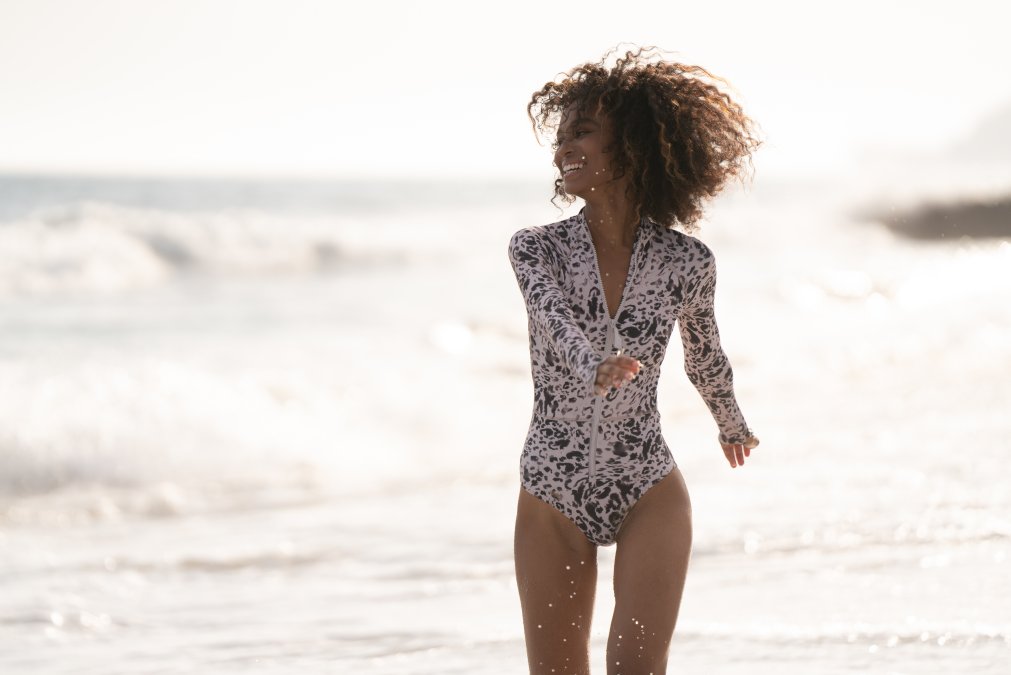
Every Classic suit includes a high collar, thumbholes, and complete arm, chest, and back coverage.
Knee-Length Biker Swimsuits for Pool Laps and Water Sports
The knee-length biker swimsuit solves a specific problem: full-body coverage is great for the beach, but lap swimming and high-intensity water sports call for a shorter cut that won't drag. TUTUBLUE's Biker Length suit is made in the USA with fabric specifically engineered to resist chlorine damage.

How to Care for Chlorine Resistant Swimwear So It Lasts
Caring for chlorine resistant swimwear comes down to three habits: rinse immediately, wash gently, and dry away from direct sun. TUTUBLUE recommends rinsing after every use, then hand washing cold with mild detergent and hanging to dry out of direct sunlight.
- Rinse in fresh water right after every swim
- Hand wash cold with mild detergent
- Skip bleach, ironing, and dry cleaning entirely
- Hang to dry in shade, never in direct sun
- Avoid wringing or stretching the fabric while wet
- Store folded, not on a tight hanger
How to Choose the Right Suit for Your Water Activities
Match the cut to how you'll actually use it. Full-body coverage wins for long beach days and snorkeling, where you want maximum skin protection with minimal reapplication. The knee-length biker cut wins for pool laps, surfing, and kiteboarding, where freedom of movement matters more than head-to-toe coverage.
Activity-by-activity breakdown:
-
Pool laps and lap swimming: Chlorine exposure is highest here, so fabric engineering matters most. The knee-length biker cut reduces drag and won't balloon with water on turns. Look for a suit with a front zipper for easy on/off between sets.
-
Open-water swimming and triathlon training: You need chlorine resistance for pool days and UPF 50+ for long sun exposure. A knee-length or full-body cut with 4-way stretch keeps you hydrodynamic without sacrificing coverage on the back and shoulders.
-
Snorkeling and paddle boarding: Full-body coverage with a high collar and thumbholes protects the back of the neck and hands, which are common burn zones people forget. The Classic full-body silhouette is built for this.
-
Surfing and kiteboarding: You want a snug fit that won't shift when you wipe out, plus quick-dry fabric so you're not sitting wet between sets. The biker cut with a front zip works well here.
-
Beach lounging and family swim days: Maximum coverage means less sunscreen to reapply. Full-body long swimsuits with thumbholes and a high collar cover the areas that burn first.
-
The high collar should sit flat against your neck without gaping when you turn your head.
-
Thumbholes should feel snug but not cut off circulation.
-
The back zipper should lie flat and not bunch.
-
In a squat or lunge, the fabric should stretch without pulling down at the shoulders.
-
If the suit feels loose in the water, it will balloon and drag, size down.
The single biggest factor in how long a suit lasts isn't the brand, it's whether the fabric was engineered for chlorine in the first place. Buy for the water you actually swim in.
Frequently Asked Questions
How can you tell if swimwear is chlorine resistant?
Look for fabric technology named on the label, such as CHLORATEK, and check whether the brand states the suit is engineered to resist chlorine damage. Generic nylon and spandex blends break down faster because chlorine attacks the elastic fibers. A chlorine resistant suit will hold its stretch, color, and UPF 50+ rating through repeated pool sessions. If the listing does not mention chlorine resistance at all, assume the fabric is not built for regular pool use.
Does UPF 50+ clothing lose its effectiveness in chlorine?
Standard UPF clothing can lose protection as chlorine degrades the fabric, thinning the weave and stretching the fibers that block UVA and UVB rays. A chlorine resistant suit like TUTUBLUE's CHLORATEK line is built to hold its structure, so the UPF 50+ rating stays intact longer. The key is fabric construction: tighter weave and durable fibers keep blocking 97% of UV rays even after repeated exposure to pool chemicals.
How do you properly care for chlorine resistant sun gear to extend its life?
Rinse your suit in cool fresh water immediately after every swim to wash away chlorine residue. Hand wash cold with a mild detergent, then hang to dry away from direct sun. Never bleach, iron, or dry clean. Avoid leaving a wet suit balled up in a bag, since trapped chlorine keeps working on the fibers. Rotating between two suits also gives each one time to fully dry and recover between wears.
Is there a difference between chlorine resistant and chlorine proof fabric?
Chlorine resistant fabric slows down damage from pool chemicals and holds its UPF 50+ protection far longer than untreated swimwear. Chlorine proof fabric does not exist in practical terms, because no textile survives unlimited chlorine exposure. The honest expectation is that a chlorine resistant suit lasts multiple seasons with proper care, while a standard suit may show stretched fibers, fading, and reduced UV blockage within one season of regular pool swimming.
What makes CHLORATEK different from regular swimsuit fabric?
CHLORATEK is engineered specifically to resist chlorine damage while maintaining UPF 50+ protection that blocks 97% of UVA and UVB rays. Regular swimsuit fabric loses elasticity and UV blockage as chlorine breaks down the fibers. CHLORATEK suits also include Quick Dry Tech and 4-way stretch, so the fabric moves with you in and out of the water and dries fast between swims, which matters if you wear the same suit all day.


Leave a comment