




Rash Guard vs Sunscreen for Swimming: Which Protects Better?

Last Updated: November 17, 2026
Quick Summary
The rash guard vs sunscreen choice is really a pairing, not a contest: a rash guard blocks UV rays over covered skin with no reapplication, while sunscreen filters UV on the skin you leave exposed. Use a UPF 50+ guard for your torso and arms, then apply sunscreen to your face, ears, hands, and legs.
- A rash guard needs no reapplication, while sunscreen must go back on after swimming and toweling.
- UPF 50+ protection drops when fabric is worn, stretched, or wet, so fit matters.
- Reapply sunscreen at least every two hours and sooner after swimming, sweating, or toweling off.
- Apply sunscreen to exposed skin before dressing, then let it settle before pulling on the guard.
- Skipping sunscreen because you wear a rash guard is the most common mistake, since your face stays exposed.
Table of Contents
- Rash Guard vs Sunscreen for Swimming: The Core Differences
- UPF 50+ Rash Guard: What the Rating Actually Means in the Water
- Sunscreen Under Rash Guard: When and How to Layer
- How Often to Reapply Sunscreen While Swimming
- Best Sun Protection for Swimming: Matching Gear to Your Activity
- Comfort, Mobility, and Real-World Tradeoffs
- Choosing Your Sun Protection Strategy for the Water
- Frequently Asked Questions
Rash Guard vs Sunscreen for Swimming: The Core Differences
The rash guard vs sunscreen question for swimming comes down to two different jobs: a garment blocks UV rays before they reach your skin, while sunscreen filters what lands on the skin you leave uncovered. UPF 50+ swimwear is built for people who want protection that stays on in the water, and sunscreen still has a place in the beach bag.
Here is the practical split. Clothing covers a fixed area and keeps working as long as it is on your body. Sunscreen covers everything else, but it needs a proper application and regular reapplication to hold up. Neither one replaces the other.
A rash guard is a close-fitting or relaxed swim shirt made from stretch fabric that shields covered skin from ultraviolet rays. A sunscreen is a topical product that absorbs or reflects UV rays on the skin it is applied to. The two work best as a pair.
How Each One Blocks UV Rays
A rash guard blocks UV rays physically. Fabric sits between your skin and the sun, and how much gets through depends on the weave, the color, the stretch, and whether the fabric is wet. A UPF rating tells you how much of that radiation the fabric stops.
Sunscreen works chemically or physically on the skin's surface. Mineral formulas use zinc oxide or titanium dioxide to sit on top of the skin and deflect UV rays. Chemical filters absorb UV energy and convert it to heat. Both need to be applied evenly and in adequate amounts to deliver the protection on the label. Because both types depend on even application, the choice in mineral sunscreen vs chemical often comes down to which formula you can apply consistently.
Coverage, Reapplication, and Water Resistance
Coverage is where the two diverge sharply. A long-sleeve rash guard protects your arms, chest, and back in one step. Sunscreen protects only what you apply it to, and missed spots are common, especially on the back, ears, and backs of the hands.
Reapplication is sunscreen's weak point. Swimming, sweating, and toweling off all reduce protection, so it needs to go back on through the day. A rash guard needs no reapplication at all.
| Factor | Rash Guard | Sunscreen |
|---|---|---|
| UV protection method | Fabric barrier | Topical filter |
| Coverage | Fixed to the garment | Only where applied |
| Reapplication | Not needed | Needed after swimming and toweling |
| Water resistance | Stays in place | Washes and wears down |
| Uncovered skin | Needs sunscreen | Covers everything you reach |
| Best for | Torso, arms, back | Face, ears, hands, legs |
UPF 50+ Rash Guard: What the Rating Actually Means in the Water
UPF 50+ is a fabric rating that describes how much UV radiation the fabric lets through. The rating is measured on the fabric in a lab, and protection depends on the fit and on the fabric staying in good condition.

The rating is not a fixed guarantee. Protection depends on the garment's condition and how it is worn. Four factors move the real-world number:
- Fabric condition: A new, tightly woven guard performs near its label. A worn, pilled, or stretched-out guard lets more UV through, and the rating no longer reflects the fabric on your body.
- Stretch: The more a fabric stretches, the more the weave opens. A suit that pulls tight across the shoulders or back reduces protection in that zone even if the label says UPF 50+.
- Wetness: Wet fabric can stretch and become slightly more transparent, which is why fit matters. A loose guard that balloons in the water exposes more skin at the neck, sleeves, and hem.
- Coverage: UPF applies only to the fabric. Uncovered skin gets no benefit from the garment's rating, no matter how high it is.
Our full-coverage pieces use Ultra Light Neoprene Scuba Fabric and CHLORATEK technology to block 97% of harmful UVA and UVB rays.
Fabric, Fit, and Wet Performance
Fabric density drives protection. Tighter weaves block more UV, and stretch is the trade-off: the more a fabric stretches, the more the weave opens.
Fit should be close but not compressive. You want the fabric to move with you without pulling tight across the chest or back. Thumb holes on a long-sleeve guard help cover the back of the hand.
If you are shopping for a high-performance guard, our guide to buy high performance UPF 50 rash guards walks through the fits and prints.
Sunscreen Under Rash Guard: When and How to Layer
Sunscreen under a rash guard matters for one reason: a rash guard only protects what it covers. The face, ears, neck, backs of the hands, and legs stay exposed, and those are the areas that burn first on a long beach day.
Apply sunscreen to exposed skin before you dress, then let it settle for a few minutes before pulling on the guard. Under the fabric, sunscreen is largely unnecessary and can make the suit feel slippery or trap sweat. Save it for the skin the sun can actually reach.
For the exposed zones, a mineral formula is a sensible pick for sensitive skin. Our SPF 30 daily sunscreen and moisturizer uses non-nano zinc oxide, rubs in clear, and blends into all skin tones.
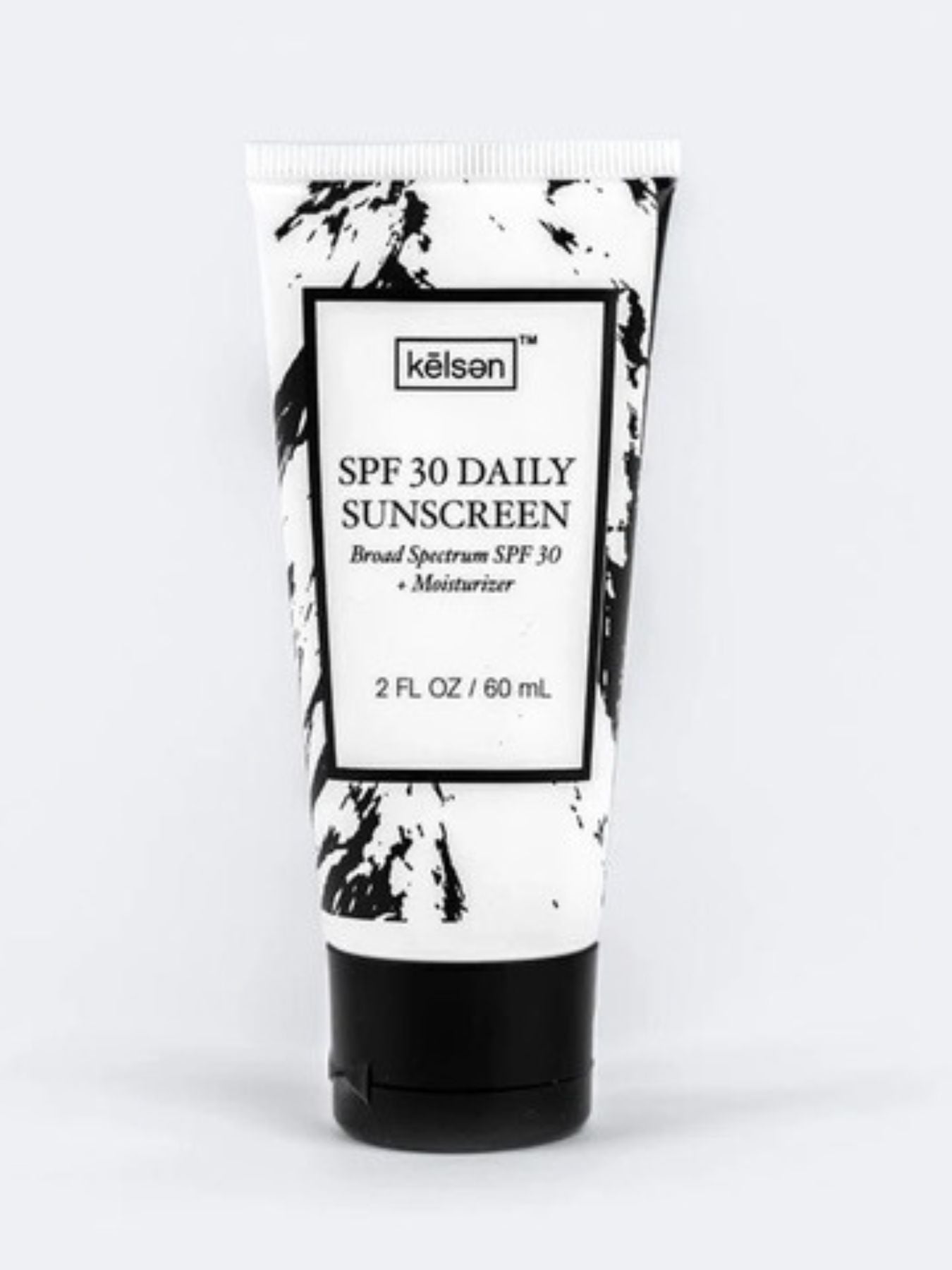
Watch out: a rash guard does not cover your face, so sunscreen is still needed on exposed skin.
How Often to Reapply Sunscreen While Swimming
Reapply sunscreen at least every two hours, and sooner after swimming, heavy sweating, or toweling off (the FDA). Water and friction both strip product from the skin, so a swim session usually means a fresh layer when you get out.
The practical routine for a swim day with a rash guard:
- Before you leave: apply sunscreen to all exposed skin, including the face, ears, neck, backs of the hands, and legs. Let it settle for a few minutes before dressing.
- Before the first swim: if you have been in the sun for a while, top up exposed skin before getting in the water.
- After each swim: towel off gently and reapply to exposed skin. This is the step most people skip, and it is where a long beach day adds up.
- Every couple of hours on land: set a phone alarm if you tend to lose track, because time in the water slips by.
Water resistance matters here. Labels use terms like water resistant for 40 or 80 minutes, which means protection holds through that window of swimming or sweating, not for the whole day. A swim session longer than the label window means reapply when you get out.
Watch out: skipping sunscreen because you are wearing a rash guard is the most common mistake we see. The garment does not cover your face, and that is where sun damage adds up fastest.
If you want to understand how long fabric protection holds up by comparison, our guide on how long UPF protection lasts explains what wears a garment's rating down over time.
Best Sun Protection for Swimming: Matching Gear to Your Activity
The best sun protection for swimming pairs a UPF 50+ garment with sunscreen on exposed skin, then adjusts the gear to the activity. A pool lap swimmer and a beach parent have different needs, and the right setup changes with them.
- Pool laps: a pullover or zip rash guard with long sleeves and a high collar covers the back and shoulders through turns.
- Beach days: a full-coverage suit plus a hat and sunscreen on the face and legs.
- Surfing and kiteboarding: a close-fitting guard that will not ride up, with thumb holes to keep sleeves in place.
- Kids and family swim: full-coverage pieces that stay on through play, with sunscreen on the face and hands.
For quick-drying options that suit active water days, our guide to quick drying sun protection swimwear covers what to look for.
Comfort, Mobility, and Real-World Tradeoffs
Comfort decides whether you actually wear the gear. A rash guard that feels hot or restrictive ends up in the bag, and then you are back to sunscreen alone. The tradeoff is real, and it is worth planning around.
Some swimmers find a rash guard less comfortable for laps and may prefer sunscreen for short pool sessions.
If you swim in humid conditions, our piece on whether lightweight rash guards are worth it in tropical humidity covers how the fabric handles heat and drying time. The honest limitation: no garment covers everything, so sunscreen stays in the routine.
Choosing Your Sun Protection Strategy for the Water
Build your strategy around coverage first, then fill the gaps. A UPF 50+ rash guard handles the torso and arms without reapplication, and sunscreen covers the face, ears, hands, and legs. That combination gives you protection that holds through a full day in the water.
The Men's Pullover Rash Guard in Blue Rock ($95.00) has a high collar and thumb holes for full chest, back, and arm coverage, with no front zipper. The Women's Zip Rash Guard in White ($104.00) can be worn open as a light layer or zipped up for more coverage.
Get started with TUTUBLUE and build a swim routine where coverage and sunscreen work together.
Coverage that stays on through every swim is the simplest upgrade to your sun routine. TUTUBLUE's UPF 50+ rash guards block 97% of UVA and UVB rays with full-coverage designs built for real water days. Pair a guard with sunscreen on exposed skin and stop worrying about the clock.
Frequently Asked Questions
Is a rash guard enough sun protection for swimming?
A rash guard covers only the torso and arms, leaving the face, ears, hands, and legs exposed. A UPF 50+ rash guard blocks most UV rays on covered skin, but you still need sunscreen on uncovered areas. For complete coverage, pair a rash guard with a mineral sunscreen like TUTUBLUE's SPF 30 Daily Sunscreen + Moisturizer ($26.00) on your face, ears, and legs, and reapply as needed.
Should you wear sunscreen under a rash guard?
If your rash guard is loose-fitting, stretched, or worn thin, UV rays can penetrate. Applying sunscreen under a rash guard makes sense if you plan to remove the garment later or if the fabric is not UPF-rated. Focus sunscreen on exposed skin and use a UPF 50+ garment for reliable coverage.
How often should you reapply sunscreen while swimming?
Reapply sunscreen regularly, and after swimming or heavy sweating. Set a timer, reapply to exposed skin, and remember that a UPF 50+ rash guard does not need reapplication, which reduces the sunscreen you need to manage.
Do rash guards protect you from UV rays when wet?
Yes, UPF-rated rash guards maintain their UV protection when wet, though fit matters. A loose rash guard can ride up or stretch, exposing skin or allowing UV rays through gaps. Choose a close-fitting or adjustable style, like TUTUBLUE's Women's Zip Rash Guard ($104.00), which can be worn open or zipped up. Fabric density and condition also matter: worn or stretched fabric loses protective value, so inspect your rash guard each season.
What parts of your body does a rash guard leave exposed?
A standard long-sleeve rash guard leaves your face, ears, neck, hands, and legs exposed. Some styles include thumb holes to cover part of the hands, and high collars protect the chest and back of the neck. For full-body coverage, pair a rash guard with swim leggings and a wide-brim hat, and apply sunscreen to any remaining exposed skin. TUTUBLUE's pullover styles include thumb holes for extended arm and hand coverage.


Leave a comment