




How to Choose Women's Swim Leggings for Water Sports

Last Updated: November 14, 2026
Quick Summary
Choose women's swim leggings for water sports by checking three things: a UPF 50+ rating for sun coverage, a quick-dry, chlorine-resistant nylon-spandex fabric, and a fit with flatlock seams that stays put when you move. Swim leggings are built to handle water, unlike regular athletic leggings.
- Look for a stated UPF 50+ rating, which blocks at least 98% of UVA and UVB rays.
- Choose quick-dry, chlorine-resistant knits rather than cotton or standard polyester blends.
- Pick four-way stretch fabric that moves with you and returns to its original shape.
- Favor flatlock or gusseted seams at the inner thigh and crotch to reduce chafing.
- Rinse leggings after each use and lay them flat to dry in the shade.
Table of Contents
- UPF 50+ Swim Leggings: Why the Rating Matters for Water Sports
- Fabric Criteria: Quick-Dry, Chlorine and Saltwater Resistance
- Fit, Compression and Seams: Staying Put and Avoiding Chafing
- How to Care for Swim Leggings So They Keep Their Protection
- Choosing Your Pair: The TUTUBLUE Women's Swim Leggings
- Frequently Asked Questions
Swim leggings are full-length, water-ready leggings built to be worn in the pool, the surf and on the water, not just on land. If you are shopping for women's swim leggings for water sports, the key difference from regular athletic leggings is how the fabric behaves when wet: swim leggings are designed to resist chlorine, dry quickly and keep their shape through repeated immersion. At TUTUBLUE, we design our women's swim leggings around the same three questions shoppers ask first: how much sun they block, how they handle water, and whether they stay put once you start moving.
Standard leggings usually absorb water, sag and lose elasticity when they get wet, and many cotton-blend styles are not built to handle pool chemicals at all. Swim leggings use nylon-spandex blends and quick-dry knits instead. That construction matters because a legging that stretches out in the pool or holds water for hours will feel heavy, chafe and wear out faster.
The main differences come down to three things:
- Fabric: Quick-dry, chlorine-resistant knits rather than cotton or standard polyester blends
- Stretch and recovery: Four-way stretch that moves with you and returns to its original shape
- Coverage: Full-length cut that protects the legs from sun, which regular leggings do not provide
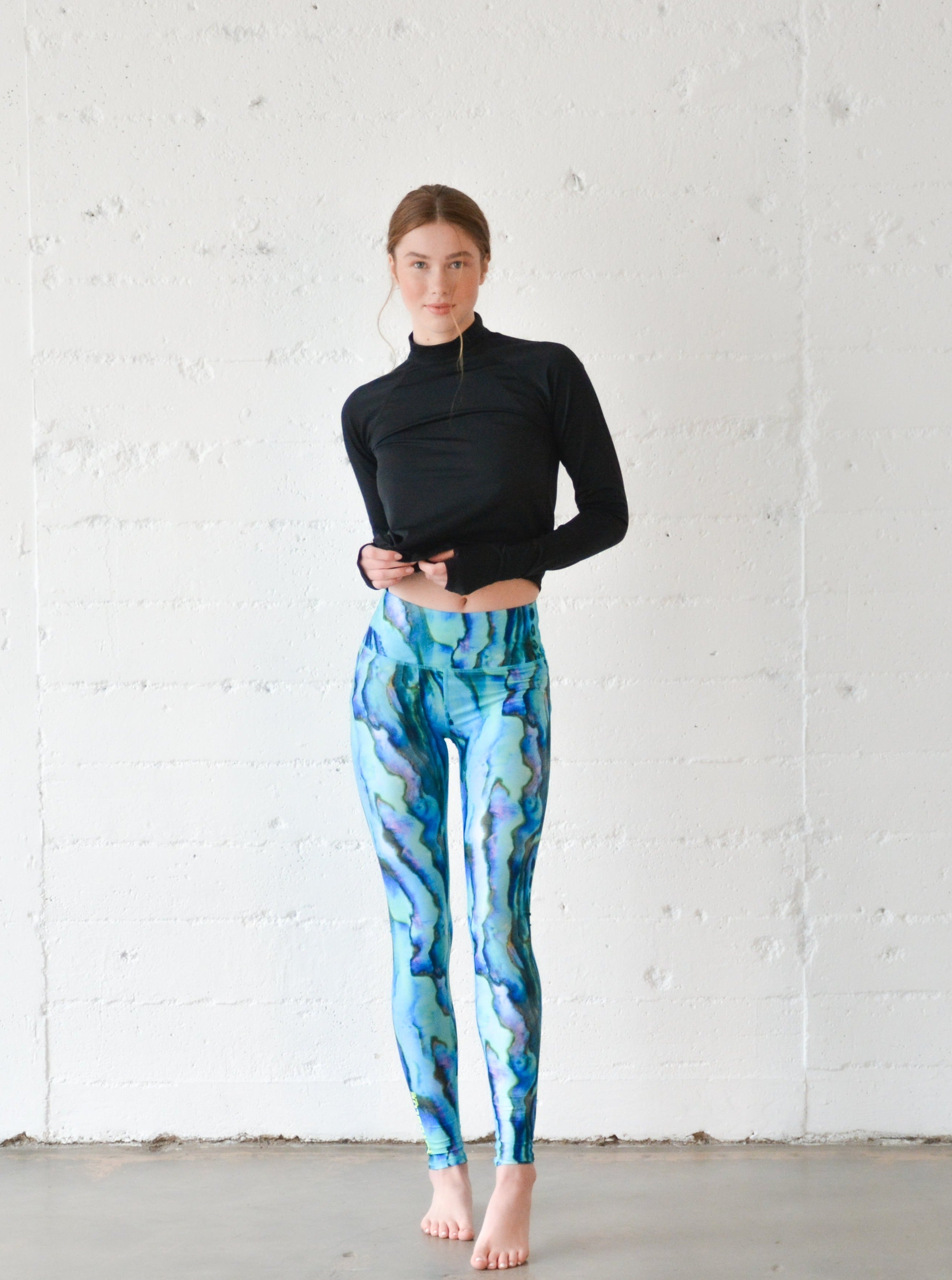
Our Women's UPF 50+ Sun Protective Swim Leggings are an example of this approach. The Blue Abalone colorway is a practical starting point if you want one pair that works for swimming, paddle boarding and everyday wear.
UPF 50+ Swim Leggings: Why the Rating Matters for Water Sports
UPF stands for Ultraviolet Protection Factor, a rating for how much UV radiation a fabric blocks. A UPF 50+ rating means the fabric blocks at least 98% of UVA and UVB rays, which is why it is the benchmark many outdoor brands use for sun-protective swimwear. Coolibar's guidance on aquatic sun protection treats UPF 50+ as the standard to look for when choosing coverage for water activity (Coolibar guidance on UPF 50+ sun protection for aquatic apparel).
For water sports, the rating matters more than it does on land. Water reflects UV light, and time on the water is often long and continuous. A sunscreen layer can wash off or be rubbed away during paddling or surfing, while fabric keeps its protection for as long as it stays intact.
When comparing options, check for:
- A stated UPF 50+ rating on the product, not just "sun protection" language
- Full-length coverage over the thighs and calves
- A fabric that stays opaque when wet, so the protection does not disappear as the material stretches
Our TUTUBLUE swim leggings carry a UPF 50+ rating and are sold as a full-coverage alternative to applying sunscreen repeatedly. Sun protection still belongs on exposed skin such as the face and hands, so treat the leggings as one layer in your routine rather than the whole plan.
Fabric Criteria: Quick-Dry, Chlorine and Saltwater Resistance
Fabric decides how a pair of swim leggings performs in the water and how long it lasts. Three criteria matter most.
Quick-dry performance. A quick-dry knit releases water fast, so you are not carrying a soaked layer back to the car. This is the difference between leggings you will happily wear all day and a pair you change out of as soon as you leave the water.
Chlorine resistance. Pool chemicals break down elastic fibers over time. If you swim several times a week, look for this claim specifically.
Saltwater durability. Salt water is less aggressive than chlorine for most fabrics, but it leaves residue that can dry out a knit and make it feel stiff. Rinsing after every session and choosing a fabric with a nylon-spandex base both help.
A practical checklist when you read product listings:
- Nylon-spandex or similar quick-dry blend
- Stated chlorine resistance
- Four-way stretch
- Opaque fabric when wet
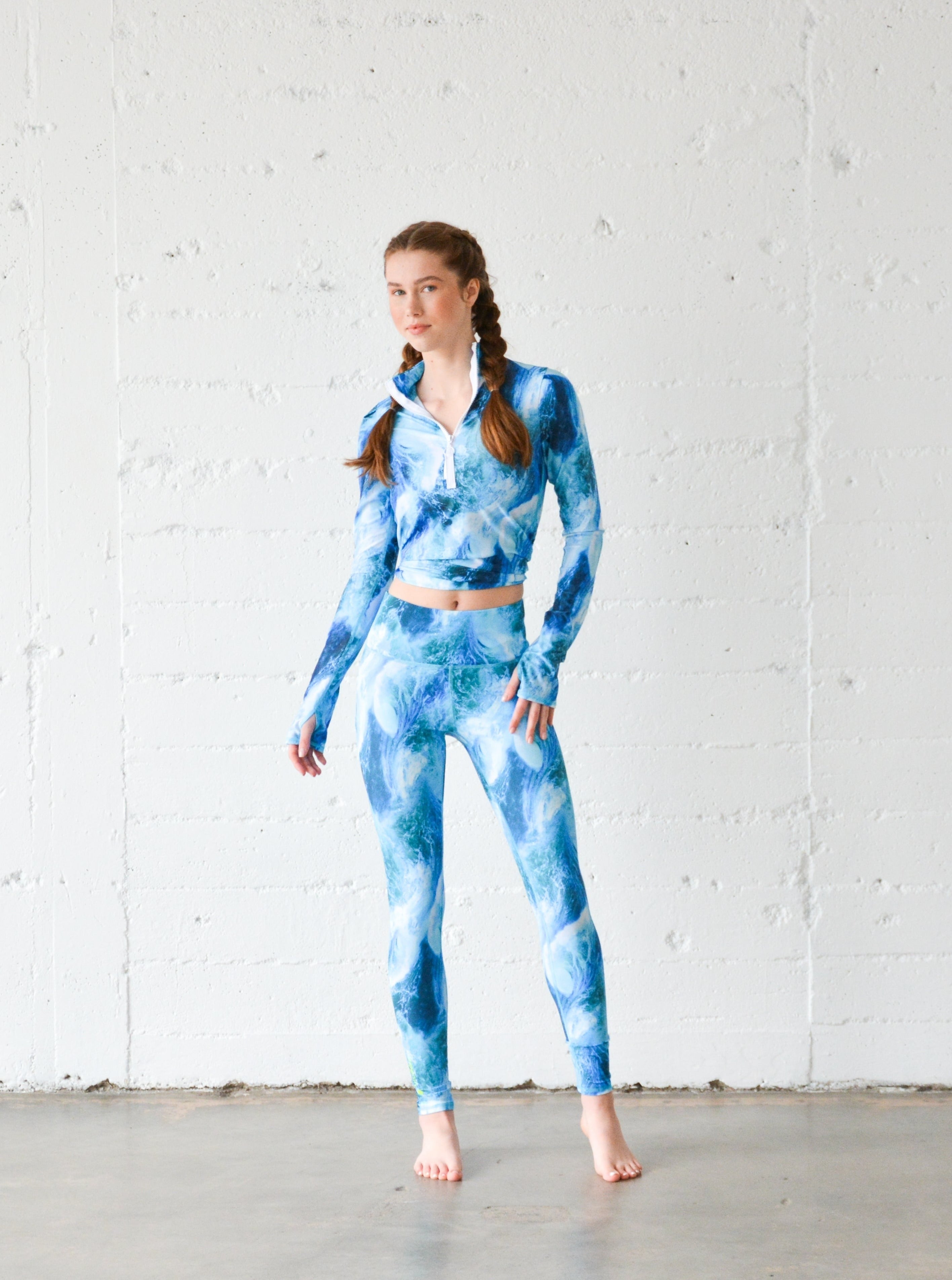
Our Women's UPF 50+ Sun Protective Swim Leggings are built from a quick-dry stretch fabric. The Waves print is one of the colorways shoppers choose when they want a bolder look without giving up the same fabric.
Here is a quick summary of the three fabric criteria that decide how swim leggings perform in the water.
| Criterion | What it means | Why it matters |
|---|---|---|
| Quick-dry performance | Knit releases water fast | Avoids carrying a soaked layer back to the car |
| Chlorine resistance | Resists pool chemicals | Pool chemicals break down elastic fibers over time |
| Saltwater durability | Resists salt residue | Residue can dry out the knit and make it stiff |
Fit, Compression and Seams: Staying Put and Avoiding Chafing
Fit determines whether swim leggings stay in place once you start moving. A pair that is too loose will slide down during a paddle stroke or a dive. A pair that is too tight can dig in at the waist and thighs and cause discomfort during long sessions.
Compression needs vary by water sport. High-impact activities like surfing and kitesurfing demand firmer compression through the quads and glutes to keep fabric from shifting during explosive movements. Low-impact activities like lap swimming and recreational paddling benefit from moderate compression that supports circulation without restricting range of motion. A common pattern is to size down for surfing if you are between sizes, and stay true to size for swimming.
Seam construction is where chafing is most often decided. Flatlock seams lie flat against the skin rather than ridging out, which reduces friction during repeated movement. Look for flatlock or bonded seams at the inner thigh and crotch, where friction is highest. A gusseted crotch, a separate piece of fabric sewn into the crotch area, eliminates the center seam entirely and is a strong chafing-prevention feature for surfers and paddleboarders who spend hours in a seated or straddling position.
Watch out: A high waistband that rolls down during activity usually signals a fit issue, not a design flaw, check that the waistband sits at your natural waist and that the rise matches your torso length before sizing up.
Our guide to flatlock seams in swimwear and why they matter explains how the construction works in more detail.
Fit tips for choosing a size:
- Measure your waist and hips and compare them to the size chart, not your usual size in other brands
- Check that the waistband stays put when you bend and stretch
- Favor a fit that feels snug but not restrictive when you sit down
- For high-impact sports, prioritize compression through the quads and glutes
- For low-impact swimming, prioritize comfort and range of motion
How to Care for Swim Leggings So They Keep Their Protection
UPF protection depends on the fabric staying intact, so care matters. Rinse your swim leggings in cool fresh water after every use to remove chlorine, salt and sand. Wash them gently with a mild detergent and avoid fabric softener, which can coat the fibers and reduce their stretch and breathability.
Do not wring them out or twist them. Lay them flat to dry in the shade, since prolonged direct sun and heat can weaken elastic fibers over time. Storing them damp in a bag is one of the fastest ways to degrade the fabric, so dry them fully first.
Washing does not automatically remove UPF protection, but stretched or damaged fabric can lose its effectiveness, so replace leggings that have thinned, pilled or lost their shape. Our guide on whether UPF clothing loses protection after washing and our UPF fabric care guide cover this in more depth.
Our Women's UPF 50+ Sun Protective Swim Leggings are available in the Blue Abalone colorway.
Choosing Your Pair: The TUTUBLUE Women's Swim Leggings
If you have worked through fabric, UPF rating, fit and care, you have the criteria you need to choose. Our Women's UPF 50+ Sun Protective Swim Leggings feature a UPF 50+ rating and quick-dry stretch fabric. They are priced at $115.00 in each colorway.
You can view the Deep Sea colorway or explore the full range before you decide.
Our pick for most shoppers is the Blue Abalone pair. Whichever colorway you choose, the same UPF 50+ fabric and stretch construction apply.
Watch out: Do not assume a sun-protective legging replaces sunscreen on exposed skin. The fabric covers your legs, but your face, hands and neck still need protection.
Ready to find your pair? Start with the full collection and pick the colorway that suits your next swim.
Frequently Asked Questions
Are swim leggings different from regular leggings?
Yes. Swim leggings are typically designed to dry quickly and keep their shape when wet. Regular athletic leggings are often cotton or polyester blends that hold water, lose elasticity and can degrade in a pool. The TUTUBLUE Women's UPF 50+ Sun Protective Swim Leggings are designed for water use, with quick-dry, stretchy fabric that works for swimming, paddleboarding and everyday wear. Look for the fabric content on the care label before buying.
Why should you choose UPF 50+ swim leggings for water sports?
A UPF 50+ rating indicates a high level of UV protection for the fabric. Water reflects and intensifies UV exposure, so full-leg coverage matters during long sessions on the water. A UPF rating is a fabric property, so it does not wash off the way sunscreen does. The TUTUBLUE leggings are rated UPF 50+ and are priced at $115.00 per pair.
How do I ensure my swim leggings stay in place during high-intensity activities?
Choose a fit that sits snugly without restricting movement, and try the leggings on before relying on them in the water. Try the leggings on and move through the motions you plan to use, such as squatting, reaching and kneeling, before you rely on them in the water.
Do swim leggings suitable for surfing and paddleboarding need special features?
Surfing and paddleboarding involve kneeling, twisting and long periods of wet contact, so look for quick-dry fabric. The TUTUBLUE Women's Swim Leggings are described for swimming, paddleboarding and general activity. Rinse them in fresh water after each session to protect the fabric.


Leave a comment