




Are Lightweight Rash Guards Worth It in Tropical Humidity?

Last Updated: October 25, 2026
Quick Summary
Lightweight rash guards are worth it in tropical humidity because thin, fast-drying fabric moves heat and moisture away from skin instead of trapping it. Choose one with UPF 50+ protection, breathable texture, and a fit that stays put when wet and stretched.
- TUTUBLUE rash guards use Ultra Light Neoprene Scuba Fabric with CHLORATEK technology to block 97% of harmful UVA/UVB rays.
- Fitted textured styles cost $100.00, while raglan pullovers with thumb holes cost $120.00.
- Wetness, stretch, and laundering can push a UPF 50 garment below its lab rating.
- Compare rash guards by drying time, breathability, wet cling, and comfort after extended wear.
- Rinse after every use, wash cool, skip the dryer, and rotate two suits to control odor.
Table of Contents
- What Lightweight Actually Means for a Rash Guard
- Quick Comparison: TUTUBLUE Rash Guards for Humid Climates
- The Best Rash Guards for Sun Protection in Steamy Weather
- UPF 50 Swim Shirts: What the Rating Does and Does Not Do
- Rash Guard Fabric for Hot Weather: Ventilation vs. UV Coverage
- Rash Guard Fit Guide: Close Fit, Surf-Style Fit, and Sizing
- Care and Odor Management in Tropical Conditions
- Choosing Your TUTUBLUE Rash Guard for Your Next Trip
- Frequently Asked Questions
What Lightweight Actually Means for a Rash Guard
Most shoppers read "lightweight" as a marketing word. In practice, it describes how a rash guard behaves once you are wet, moving, and standing in air that feels like a warm towel.
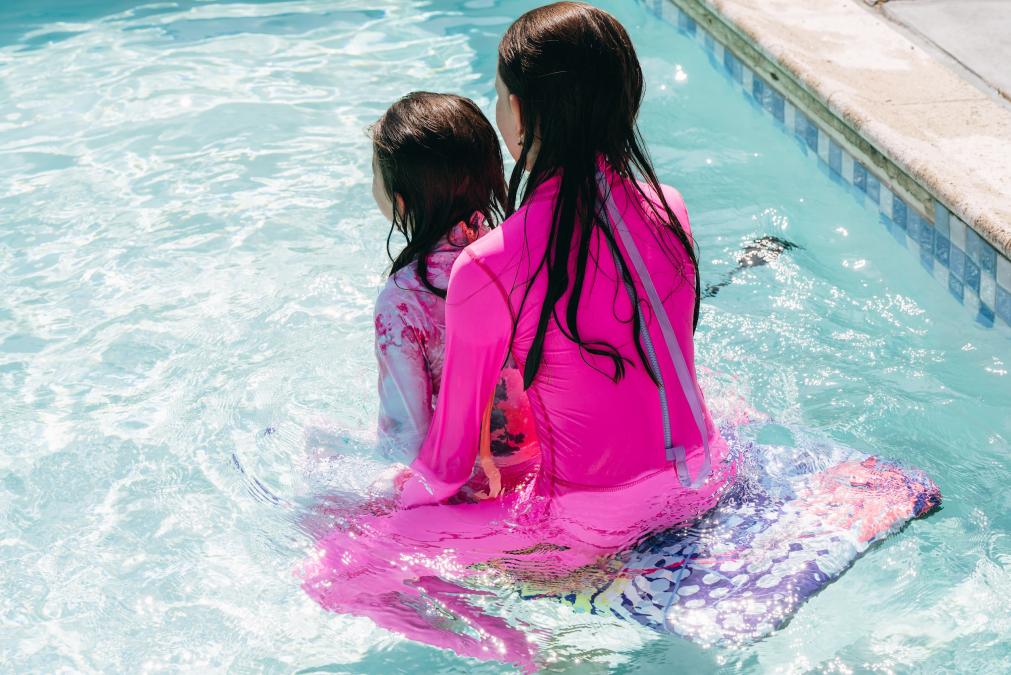
A lightweight rash guard is a close-fitting sun protection top built from thin, stretch fabric that dries fast and holds little water, so it stays comfortable in hot, humid air rather than trapping heat against the body.
That definition matters because thin fabric alone is not enough. The American Cancer Society guidance on UV radiation and skin protection makes the case for covering up with fabric rather than relying on sunscreen alone, which is exactly where a rash guard earns its place.
Fabric Weight, Airflow, and Heat Retention
Three things decide whether a rash guard feels light in the tropics: fabric weight, airflow, and heat retention.
- Fabric weight: thinner knits dry faster and feel cooler, but they must still block UV rays effectively.
- Airflow: a close fit moves sweat away from skin; a loose fit lets air circulate but can balloon in the water.
- Heat retention: dark, dense, rubbery fabric holds warmth. Soft, breathable knits release it.
How those trade-offs play out:
| Factor | Lighter Fabric | Heavier Fabric | What It Means in Humidity |
|---|---|---|---|
| Drying time | Fast | Slow | Lighter fabric spends less time wet against skin |
| Airflow | Good with a close fit | Limited | Ventilation depends on cut as much as weight |
| Heat retention | Low | High | Heavy fabric traps warmth on still, muggy days |
| UV coverage | Depends on weave and rating | Usually higher density | Always check the UPF label, not the thickness |
| Comfort when wet | Stays light | Feels heavier | The difference you notice by mid-afternoon |
A common mistake is assuming thicker equals safer. Coverage comes from fabric construction and UPF rating, not bulk.
Quick Comparison: TUTUBLUE Rash Guards for Humid Climates
Our lineup splits into two fits, both built for warm, sticky weather. Every piece uses our Ultra Light Neoprene Scuba Fabric with CHLORATEK technology, engineered to block 97% of harmful UVA/UVB rays, so the choice comes down to fit and coverage rather than protection.
| Style | Fit | Price | Coverage | Best For |
|---|---|---|---|---|
| Textured Fitted (Sunflower, Aloha, Sea Poppy Pink, Mint, Cookies, Cream) | Close, cropped | $100.00 | Long sleeve, cropped waist | Beach days, swimming, snorkeling |
| Pullover Raglan (Foam Ink, Aloha, Secret Garden, Moon) | Looser, longer | $120.00 | High collar, thumb holes | Surfing, paddle boarding, long sun hours |
Both lines are recycled, textured, and breathable. For a closer look at a zip-front option, view the Womens Zip Rash Guard Aqualung to compare features and design.
The Best Rash Guards for Sun Protection in Steamy Weather
The best rash guard for steamy weather keeps blocking UV rays while staying comfortable enough that you actually keep it on, a suit you peel off after twenty minutes protects nothing. Our picks lean on breathable fabric, soft texture, and a cut that stays put in the water. Men looking for a breathable pullover can view the Mens Pullover Rash Guard Banded Sea Snake product page.
Fitted Textured Line: Sunflower, Aloha, Sea Poppy Pink, Mint, Cookies, Cream
The fitted textured line is our answer to "I want protection that still looks like fashion." Each piece is a cropped, long-sleeve rash guard in soft, recycled, textured fabric that contours to the body while staying breathable.
- Sunflower: bright, cheerful, and built for sun-filled beach and boat days.
- Aloha: a tropical print with a playful, elevated feel.
- Sea Poppy Pink: vibrant and feminine, easy to pair with high-waisted bottoms.
All six deliver UPF 50+ coverage for swimming, snorkeling, surfing, and paddle boarding. The cropped length pairs with high-waisted swim bottoms for a coordinated set. Best for: women who want a close, flattering fit and easy styling. Skip if: you want full torso and hand coverage for hours of direct sun.
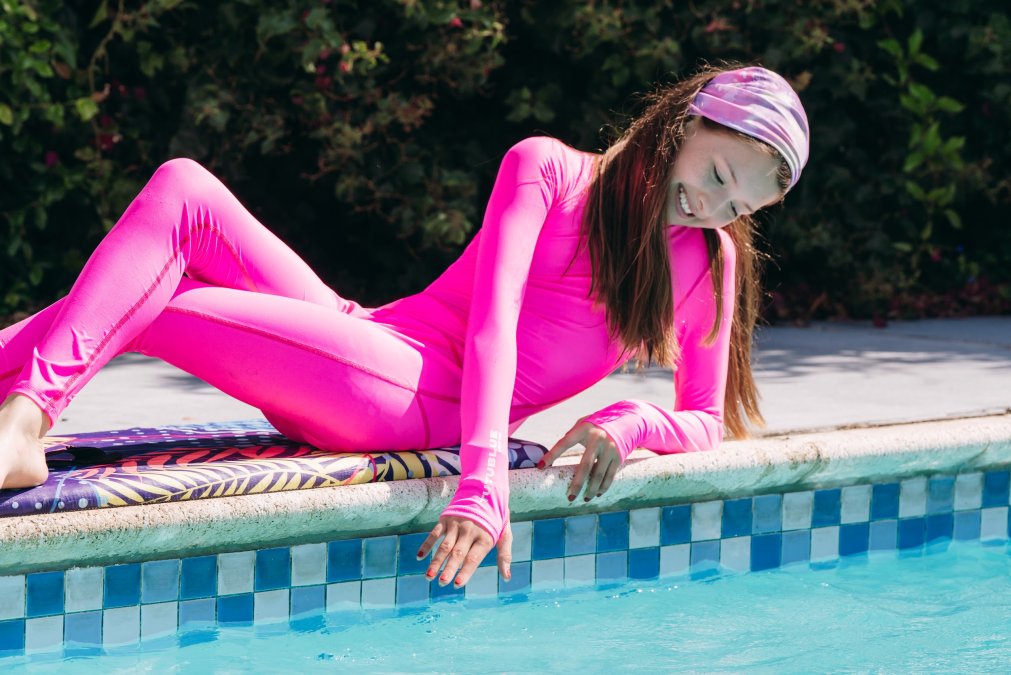
Raglan Pullover Line: Foam Ink, Aloha, Secret Garden, Moon
The raglan pullovers solve the coverage problem differently: a looser fit, a high collar for full chest and back protection, and thumb holes that cover your full arms and hands. Browse the Womens Pullover Rash With Raglan Sleeves Night Palm to see the raglan-sleeve style up close.
- Foam Ink: the understated, goes-with-everything option.
- Aloha: the same tropical print in a roomier cut.
- Secret Garden: a softer, more romantic pattern.
Want a cropped look? Tie it in the back with a hair tie and tuck it under. Best for: surfers, kiteboarders, and anyone logging long sun hours who wants hand and neck coverage. Skip if: you prefer a body-hugging silhouette.
UPF 50 Swim Shirts: What the Rating Does and Does Not Do
UPF 50 swim shirts block most UV radiation that reaches the fabric, but the rating is not a force field, and in tropical humidity it behaves differently than on a dry tag. Understanding those limits is the difference between trusting a number and trusting a garment.
UPF stands for Ultraviolet Protection Factor, and it measures how much UV radiation passes through fabric to your skin. A UPF 50 rating means the fabric allows roughly one-fiftieth of UV rays through, about 2%, which is why dermatologists and skin-cancer organizations push covered-up options so hard (Sun Protective Clothing). The Skin Cancer Foundation's sun protection guidance explains why fabric coverage belongs in any serious sun strategy.
How Humidity, Wetness, and Stretch Change Real-World UPF
A UPF 50 label is measured on dry, relaxed fabric in a lab. In the tropics, three things routinely push a garment below that rating:
Women's Textured & Fitted UPF 50+ Rash Guard - Sunflower →
- Wetness: many knits lose protection when saturated because water fills the gaps between yarns and reduces how much UV scatters. A shirt that tests at UPF 50 dry can drop noticeably when soaked, which is exactly when you are most exposed.
- Stretch: pulling fabric tight over shoulders, chest, and back thins the weave and opens microscopic gaps. A close fit that feels secure on land can stretch thin across the upper back during a paddle stroke.
- Wear and laundering: repeated chlorine exposure, salt, and dryer heat break down fibers and elastic. A rash guard that protected well in season one may not in season three.
That is why fabric quality matters as much as the number on the tag. Our Ultra Light Neoprene Scuba Fabric is engineered to block 97% of harmful UVA/UVB rays, with the rating built into the material so protection holds up when the fabric is wet and working.
What the Rating Does Not Cover
- Exposed skin: your face, hands, and the gap at a cropped waist are outside the fabric and outside the rating.
- Shade and timing: UPF does not replace avoiding peak sun or seeking shade during the strongest hours.
- Sunscreen on uncovered areas: fabric coverage and sunscreen work together, not as substitutes.
Rash Guard Fabric for Hot Weather: Ventilation vs. UV Coverage
Here is the tension nobody puts on a product page: the more air a fabric lets through, the more UV it can potentially let through too. Ventilation and UV coverage pull in opposite directions, and the best rash guard fabric for hot weather balances them instead of maxing out one. Most roundups treat "lightweight" and "breathable" as synonyms for good; in tropical humidity, they are not.
The Mechanism: Why Airflow and UV Fight Each Other
UV protection comes from how densely yarns are packed. A tight weave blocks more UV but traps heat and moisture; an open knit releases heat but leaves gaps where UV passes. The fix is a knit dense enough for UPF 50+ while still releasing heat, the design brief behind our breathable, textured Ultra Light Neoprene Scuba Fabric: quick-drying, moisture-wicking, and soft against skin so it does not chafe during long water sessions.
Four Humidity-Specific Performance Criteria
Compare any rash guard on these four repeatable measures:
- Drying time: how quickly the fabric sheds water after a soak. Faster drying means less time wet against skin and less evaporative chill when a breeze picks up.
- Breathability: how readily heat and vapor escape during still, muggy conditions, the difference between a shirt you forget you are wearing and one you peel off by noon.
- Wet cling: how much the fabric sticks and bunches when saturated. A shirt that clings and stays soaked feels heavier than a well-cut suit with better airflow.
The Trade-Off to Watch
A cheap, thin rash guard that feels cool at first can stretch and thin out with wear, and stretched fabric protects less. Lightweight is not flimsy: the goal is fabric light enough to move heat and moisture but dense enough to hold its UPF rating when wet and stretched. Check seams too, flatlock construction reduces chafing, and reinforced stitching holds the fit that keeps protection in place.
Rash Guard Fit Guide: Close Fit, Surf-Style Fit, and Sizing
Fit decides comfort more than fabric does. A close fit keeps the shirt from ballooning against your skin; a looser surf-style fit gives you room to move and breathe. Neither is wrong, they suit different activities and body types.
- Close fit: best for swimming, snorkeling, and diving, where drag and bunching matter. Our textured fitted line is cut for this.
- Surf-style fit: best for surfing, paddle boarding, and long beach days, where you want room and full coverage. The raglan line is built for this.
- Sizing: measure your bust and torso, then check each product's size chart. If you are between sizes and want a close fit, size down; if you want room, size up.
If you are still deciding which silhouette flatters you most, our guide on how to choose stylish sun protective swimwear walks through fit and style in more depth.
Care and Odor Management in Tropical Conditions
Heat and humidity are hard on swim fabric, and odor is the complaint we hear most. The fix: rinse after every use, wash cool, and dry in shade.
- Rinse immediately: fresh water after salt or chlorine stops odor before it starts.
- Wash cool, skip the dryer: heat breaks down stretch fibers. Hang to dry in shade.
- Avoid fabric softener: it coats fibers and traps odor.
Watch out: leaving a damp rash guard balled up in a beach bag overnight is the fastest way to bake in a smell that never fully leaves.
Choosing Your TUTUBLUE Rash Guard for Your Next Trip
Packing for a humid trip comes down to two questions: how much coverage do you want, and how close do you want the fit? Fitted and cropped for a sleek beach look, raglan for full-arm coverage and room to move.
For style inspiration before you pack, our stylish rash guards for beach vacations guide pairs each piece with real trip scenarios.
Frequently Asked Questions
Are lightweight rash guards comfortable in hot, humid weather?
Yes, when the fabric is genuinely thin and breathable. A lightweight rash guard made from soft, recycled textured fabric moves air against the skin and dries fast, so it feels cooler than a heavy neoprene-style top. Look for a close fit that does not trap a layer of hot air, flatlock seams that will not chafe, and a fabric that wicks moisture instead of holding it. TUTUBLUE's textured fitted line is built for warm-weather wear, and the raglan pullovers add a high collar and thumb holes for full arm coverage without bulk.
Should a rash guard fit tightly or loosely?
It depends on what you are doing. A close fit is best for swimming, surfing, and snorkeling because it stays in place, reduces drag, and keeps chafing down. A looser surf-style fit, like TUTUBLUE's raglan pullovers, gives more airflow and is easier to pull on and off, which helps in humid weather. Use the rash guard fit guide in this article: measure your chest and waist, check the size chart, and size up only if you want a relaxed feel rather than a second-skin fit.
Do you need to reapply sunscreen under a rash guard?
Not on the skin the fabric covers. A UPF 50+ rash guard blocks most UV rays on covered areas, so you can skip sunscreen there and focus on exposed spots like your face, neck, hands, and the backs of your legs. TUTUBLUE's UPF 50+ tops are designed to shield covered skin during swimming, surfing, and beach days. Reapply sunscreen to uncovered skin every two hours, and sooner if you are sweating heavily or toweling off.
What fabric is best for a rash guard in tropical humidity?
Pick a lightweight, breathable, moisture-wicking fabric that dries quickly. Soft recycled textured fabric works well because it stays comfortable against the skin and does not hold water the way heavier knits do. Flatlock seams reduce chafing, and stretch helps the shirt keep its shape. TUTUBLUE's textured fitted rash guards use soft recycled fabric for warm-weather breathability, while the raglan pullovers add a high collar and thumb holes for extra coverage on long sun days.
Do rash guards keep you warm?
A thin rash guard adds little warmth on its own, which is why lightweight versions suit tropical humidity. Heavier or neoprene-style tops hold more heat and are better for cooler water or wind. In hot, humid conditions, choose the lightest breathable fabric you can find and a close fit that allows airflow. If you get cold easily after swimming, layer a looser raglan pullover over your swimsuit so you can adjust coverage through the day.
Humid heat is unforgiving on cheap swim fabric, and the wrong rash guard ends up in your bag before lunch. TUTUBLUE builds suits you will actually keep on, with Ultra Light Neoprene Scuba Fabric, CHLORATEK technology that blocks 97% of harmful UVA/UVB rays, and UPF 50+ coverage in fits made for real beach days. Get started with TUTUBLUE and stay protected from the first swim to the last.


Leave a comment