




Best Sun Protective Swimwear for Women: UPF 50+ Guide

Table of Contents
- Why UPF 50+ Swimwear Beats Sunscreen Alone
- Quick Comparison: Best Sun Protective Swimwear for Women
- Best Long Sleeve Swimsuits 2026: Top Picks for Full Coverage
- How to Choose UPF Clothing That Actually Protects
- Full Coverage Sun Protection Swimwear for Every Body Type
- Sun Protective Swimwear Care Tips to Keep UPF Working
- Fabric Technology: Quick-Dry, Chlorine-Resistant, and Breathable
- Environmental Impact: Recycled Fabrics and Sustainable Swimwear
- Frequently Asked Questions
Last Updated: September 21, 2026
Why UPF 50+ Swimwear Beats Sunscreen Alone
Sunscreen wears off. Fabric doesn't. That's the core reason best sun protective swimwear for women has moved from niche to necessity, and it's the principle TUTUBLUE was built on after founder Sarah Buxton's melanoma scare. The American Academy of Dermatology's sun protection guidance is blunt about it: no sunscreen blocks everything, and reapplication every two hours is the part most people skip.

UVA vs. UVB Rays: What Your Swimsuit Needs to Block
UVA rays penetrate deep into the skin, cause aging, and pass through glass and clouds. UVB rays are the ones that cause visible sunburn. Both contribute to skin cancer risk, so a suit that only handles one isn't doing its job.
Quick Comparison: Best Sun Protective Swimwear for Women
Here's how the TUTUBLUE lineup breaks down by coverage, use case, and price. Every option below carries UPF 50+ protection.
| Style | Coverage | Price | Best For |
|---|---|---|---|
| Classic Long Swimsuit | Full body, high collar, thumbholes | $188.00 | All-day sun, snorkeling, paddle boarding |
| RORO Front-Zip Swimsuit | Full body, front zipper | $188.00 | Beach-to-street transition, travel |
| Classic Short Swimsuit | Full arms and chest, short leg | $165.00 | Those who want leg exposure |
| Biker Knee-Length Swimsuit | Full arms, knee-length leg | $165.00 | Active water sports, made in the USA |
| One Piece Front Zip | Long sleeves, crew neck, thumbholes | $140.00 | Versatile one-piece coverage |
| Zip Rash Guard | Arms, chest, back | $130.00 | Layering over other suits |
| Swim Leggings | Full leg | $115.00 | Pairing with rash guards |
| Swim Skort | UPF 50+ skirt with shorts | $95.00 | Casual beach days |
| Reversible Halter Top | Upper body | $50.00 | Mix-and-match styling |
Best Long Sleeve Swimsuits 2026: Top Picks for Full Coverage
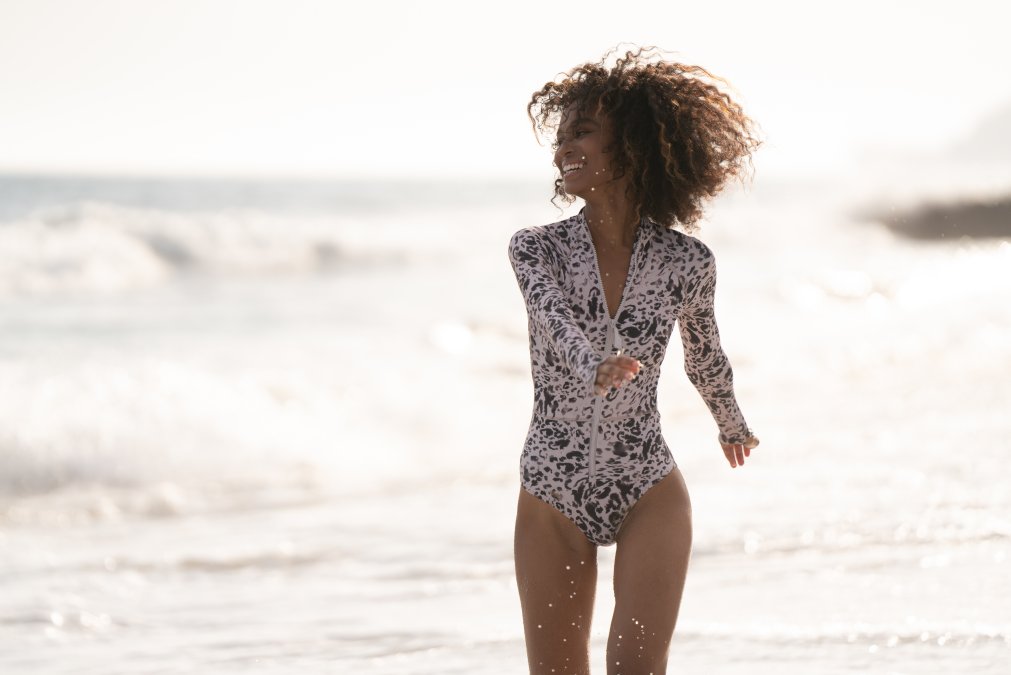
Classic Long Swimsuit: Maximum Protection for All-Day Sun
The Classic Long Swimsuit is TUTUBLUE's most protective design, combining the function of a dive suit with the fit of a modern unitard. A high collar, thumbholes, and complete arm, chest, and back coverage let you stay in the sun all day.

RORO Front-Zip Swimsuit: Beach to Street Transition
The RORO Long Sleeve Swimsuit blocks a stated 98% of harmful UVA and UVB rays and adds a sleek front zipper for customizable coverage. The flattering, streamlined fit transitions seamlessly from swimwear to streetwear, making it perfect for travel, errands, and all-day sun exposure without requiring constant sunscreen reapplication.

How to Choose UPF Clothing That Actually Protects
Start with the rating, then the coverage, then the fit. A UPF 50+ label is the baseline, but a loose, stretched, or worn-thin fabric won't deliver the protection printed on the tag. Here's a practical checklist:
- Does the label state UPF 50+ and name both UVA and UVB blocking?
- Does it cover the spots you actually burn (shoulders, arms, back of neck)?
- Is the fabric dense and opaque when held to light?
- Does it have 4-way stretch so it stays in place during movement?
- Are there practical details like thumbholes, a high collar, or a secure zipper?
- Is it quick-dry and chlorine-resistant for repeated pool use?
Chemical vs. Physical Protection: What's in Your Fabric?
Physical protection blocks UV rays through the fabric's weave and density, with no chemicals absorbing into your skin. Chemical protection relies on additives or treatments that absorb UV radiation.
Full Coverage Sun Protection Swimwear for Every Body Type
Full coverage doesn't mean one shape. The range runs from a full-body unitard to a swim skort to a reversible halter top, so you can build the coverage that fits your body and your day.

How UPF Fabrics Fit Differently Than Standard Swimwear
Here's what most sizing charts won't tell you: sun-protective swimwear uses denser fabrics than standard nylon-spandex suits, which changes how the garment stretches, recovers, and sits on the body.
Specific Fit Notes by Style
The Swim Skort offers UPF 50+ protection with an elastic waist and attached shorts, made from 80% recycled polyester and 20% Spandex. The waist accommodates a range of midsections without digging in, and the shorts stay put during movement.
Building a Custom Coverage System
Buying separates lets you mix coverage levels. Want full arm protection but a shorter leg? Pair a long-sleeve rash guard with the Swim Skort. Need maximum coverage for snorkeling? Wear the Classic Long Swimsuit alone. You're not locked into one silhouette, you build the protection that matches your activity.
Sun Protective Swimwear Care Tips to Keep UPF Working
UPF protection lives in the fabric, so how you wash matters. Chlorine, harsh detergents, and high heat break down fibers, and a stretched or thinned fabric loses its rating. Follow these habits:
- Rinse in cool fresh water immediately after swimming in a pool or saltwater
- Hand wash or use a delicate cycle with mild detergent
- Skip the dryer and dry flat, away from direct heat
- Avoid fabric softeners and bleach, which coat or damage fibers
- Never wring or stretch the suit aggressively
Fabric Technology: Quick-Dry, Chlorine-Resistant, and Breathable
The best sun-protective fabric does three things at once: blocks UV, dries fast, and stays comfortable. Quick-dry matters because wet clothing clings and chafes, and nobody wants a heavy, soggy suit all day.
How Fabric Actually Blocks UV: The Weave Mechanism
Most shoppers assume UPF comes from a chemical coating. In reality, the protection lives in the construction. Tightly woven or knitted fibers create a physical barrier that scatters and absorbs UV radiation before it reaches your skin. The denser the weave, the higher the UPF rating, a white cotton t-shirt rates around UPF 5 to 10, while purpose-built swim fabric can hit UPF 50+.
Three variables determine how much UV a fabric blocks:
- Fiber type: Polyester and nylon outperform cotton and rayon because their molecular structure absorbs UV more efficiently.
- Weave density: A tighter knit leaves fewer gaps for rays to pass through. Hold any suit up to a bright light, if you can see through it, UV can get through it.
- Color and dye: Darker colors absorb more UV than pale ones.
Quick-Dry and Chlorine Resistance: What to Look For
Quick-dry performance comes from fiber structure, not marketing. Polyester and nylon dry faster than cotton because they absorb less water into the fiber, moisture sits on the surface and evaporates. A suit labeled "quick-dry" should feel noticeably lighter within minutes of leaving the water.
Environmental Impact: Recycled Fabrics and Sustainable Swimwear
Conventional swimwear is often made from virgin synthetic fibers that shed in the wash and end up in waterways. Recycled fabrics reduce that footprint without sacrificing performance.
Frequently Asked Questions
What is the best UV protection swimwear for adults?
The best UV protection swimwear for adults blocks 97-98% of UVA and UVB rays with a UPF 50+ rating. Look for full-coverage designs like long-sleeve swimsuits with high collars and thumbholes, or pair a zip rash guard with swim leggings. TUTUBLUE's Classic Long Swimsuit and RORO front-zip styles offer certified UPF 50+ protection with quick-dry fabric and four-way stretch, so you stay covered during swimming, paddle boarding, or all-day beach activities.
How does UPF 50+ differ from regular swimwear fabric?
Regular swimwear fabric offers minimal UV protection, often equivalent to SPF 5-10, and loses effectiveness when wet or stretched. UPF 50+ fabric blocks 98% of UV radiation and is tested according to ASTM standards. The protection comes from the fabric construction and treatments, not a coating, so it doesn't wash off. TUTUBLUE's suits use Ultra Light Neoprene Scuba Fabric and CHLORATEK technology to maintain UPF 50+ protection through repeated wear and washing.
How should I care for my UPF swimwear to maintain protection?
Rinse your UPF swimwear in cold water after every use to remove chlorine, salt, and sunscreen residue. Hand wash with mild detergent, then lay flat to dry away from direct sunlight. Avoid wringing, bleach, and fabric softeners, which break down the fabric fibers that provide UV protection. TUTUBLUE's swim skort is made from 80% recycled polyester and 20% Spandex, and the brand recommends a delicate wash and dry flat. With proper care, UPF 50+ protection lasts the life of the garment.
Does SPF clothing actually work?
Yes, UPF clothing works differently than sunscreen. While SPF measures how long you can stay in the sun before burning, UPF measures how much UV radiation passes through the fabric. UPF 50+ blocks 98% of UVA and UVB rays. Unlike sunscreen, UPF protection doesn't wash off with sweat or water, and you don't need to reapply. Dermatologists recommend UPF clothing as a first line of defense for people with fair skin, a history of sun sensitivity, or a family history of skin cancer.
What swimwear is most flattering for older ladies?
Full-coverage swimwear with strategic design details flatters mature body types. Look for high-waisted swim leggings that smooth the midsection, swim skorts with attached shorts for thigh coverage, and zip rash guards that create a streamlined silhouette. TUTUBLUE's Classic Short Swimsuit offers full arm and chest protection with a short leg that shows some leg, while the Reversible Halter Top provides adjustable fit for all body shapes. The key is choosing pieces that feel comfortable and confident.


Leave a comment