




Neoprene vs Nylon for Sun Protection: UPF Guide

Table of Contents
- Neoprene vs Nylon for Sun Protection: The Short Answer
- How Does UPF Fabric Block UV Rays?
- UPF vs SPF: What's the Difference?
- Neoprene's Construction and UV Performance
- Nylon's UV-Protection Properties and Limits
- Does Wet Clothing Block UV Rays?
- How to Wash UPF Clothing So It Keeps Its Rating
- Which Fabric Wins for Your Water Sports and Hot-Weather Use?
- Frequently Asked Questions
Last Updated: October 17, 2026
Neoprene vs Nylon for Sun Protection: The Short Answer
Neoprene vs nylon for sun protection comes down to one fact: neither fiber blocks UV rays on its own. Protection lives in the construction, the weave or coating, and the coverage. Nylon can deliver excellent sun protection when woven tightly, and neoprene performs well when laminated to a protective outer layer. At TUTUBLUE, we build both into our suits, because the honest answer is that the fabric matters less than how it is made.
Here is the part most guides get wrong: they rank fibers as if protection were a property of the thread. It is not.
How Does UPF Fabric Block UV Rays?
UPF fabric blocks UV rays by absorbing or scattering ultraviolet radiation before it reaches your skin. Tight weaves leave smaller gaps between yarns, so less UV light passes through. Darker dyes and denser constructions absorb more, and some fabrics carry a finish that reflects UV rays outright.
UPF stands for Ultraviolet Protection Factor, a rating for fabric rather than skin. A UPF 50 rating means the fabric allows roughly one-fiftieth of UV radiation through, though real protection drops when a garment is stretched, wet, or worn thin.
Two types of UV rays matter here. UVB causes burning, while UVA penetrates deeper and drives aging and long-term damage. A fabric that blocks both is doing the job that matters.
Skin Cancer Foundation guidance on UV radiation and sun-protective clothing
UPF vs SPF: What's the Difference?
UPF vs SPF is the difference between fabric and skin: SPF rates sunscreen applied to your body, and UPF rates how much UV radiation passes through a garment. SPF is tested on human skin and measures how long you can stay out before burning. UPF is tested on fabric and measures how much UV is blocked.
That distinction changes how you use each one. Sunscreen needs reapplication as it wears, sweats off, or washes away. A UPF-rated garment keeps working as long as the fabric stays intact and fitted. Neither approach covers everything alone, which is why exposed skin still needs sunscreen even in a full-coverage suit.
Neoprene's Construction and UV Performance
Neoprene's UV performance depends almost entirely on what it is bonded to. Neoprene is a synthetic rubber foam, and foam alone is not a woven textile with a measurable UPF. In swimwear, the foam is laminated to a knit face fabric, and that outer layer does the UV work.
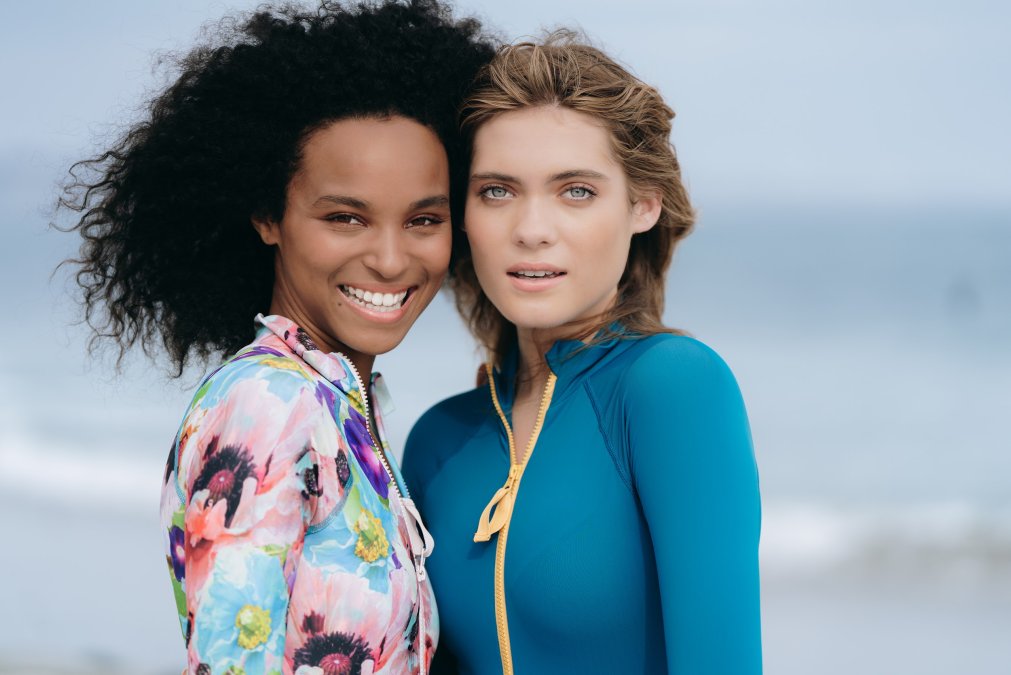
Our Ultra Light Neoprene Scuba Fabric pairs that construction with UPF 50+ protection. The foam adds a light layer of warmth and gentle compression, which is why neoprene suits hold their shape and coverage during active movement.
Why Neoprene Is Usually Laminated, Not Woven
Neoprene is usually laminated because the foam itself has no weave to tighten. Manufacturers bond a knit face fabric to the foam, and that face fabric is where UV protection is engineered in. This is why a neoprene garment's protection is only as good as its laminate.
A common mistake is assuming thicker neoprene means more protection. Thickness adds warmth and buoyancy, not UV blocking. The rating comes from the face fabric and its finish.
The Foam Core vs. the Face Fabric: What Each Layer Does
Think of a neoprene garment as two materials doing two jobs. The foam core provides insulation, buoyancy, and structure. The face fabric provides the surface that UV rays actually hit. When you see a UPF rating on a neoprene suit, that number describes the face fabric's performance, not the foam's.
This distinction matters when you compare suits. Two neoprene suits of identical thickness can have very different UV protection if their face fabrics differ in knit density, color, or finish. A dense, dark face fabric with a tight knit blocks more UV than a loose, light one, even when the foam core is the same.
The face fabric's weave and finish are the deciding variables, which is why we specify UPF 50+ on the laminate rather than on the foam. If a product page lists neoprene thickness but not a UPF rating, you are looking at warmth and fit data, not sun-protection data.
Nylon's UV-Protection Properties and Limits
Nylon's UV protection is real but conditional. As a synthetic fiber, nylon generally outperforms natural fibers like cotton in UV blocking, and a tight nylon weave can reach high UPF ratings. The catch is that standard nylon swimwear is often thin and stretchy, and stretching opens the spaces between yarns.
REI guidance on how fabric weave and fiber type affect UV protection
That is the limit worth knowing. A nylon suit fresh off the rack may test well and still underperform after an hour of swimming, because wet, stretched fabric lets more UV through.
Reefline X Tutublue Front‑Zip Crewneck Scuba Suit →
Weave, Density, and Coverage in Nylon Swimwear
Weave and density decide how much UV light slips between yarns, and coverage decides how much skin is exposed in the first place. A dense, dark nylon knit blocks more than a loose, light one. Full-coverage cuts, long sleeves, and high necks remove exposed skin entirely, which matters more than any single fiber choice.
When you shop, hold the fabric up to light. If you can see through it easily, UV rays are getting through too.
Does Wet Clothing Block UV Rays?
Wet clothing blocks less UV than dry clothing in most cases. Water fills the gaps between fibers and reduces the scattering that normally bounces UV light away, so more radiation reaches your skin. Stretch makes it worse: a suit pulled tight across the shoulders or knees thins out and lets more through.
This is exactly where neoprene has an advantage for water sports. A laminated neoprene suit holds its density when wet and does not cling and thin the way a light nylon swimsuit can. For surfers, kiteboarders, and anyone spending hours in the water, that consistency is the difference between a rating on a tag and protection that lasts.
Stretch, Wear, and Damage: The Variables Most Guides Skip
A UPF rating is measured on fabric in a lab, usually flat and dry. Real-world conditions change the number. Stretching a knit opens the spaces between yarns, and the more a garment stretches, the more UV passes through. That is why a tight-fitting nylon swimsuit can underperform a looser one of the same material.
Wear and damage matter too. Pilling, thinning, and snags from rough surfaces create tiny gaps in the weave. A suit that tested well when new can lose protection over seasons of use. Chlorine and saltwater accelerate fiber breakdown, and hot dryers weaken the finish that helps block UV.
Neoprene behaves differently because its foam core resists the thinning that plagues light knits. The face fabric can still stretch and wear, but the foam underneath maintains the garment's structure and keeps the laminate from clinging and thinning against the skin. That structural consistency is why neoprene suits hold their coverage during active movement in a way that light nylon often does not.
How to Judge Real-World Protection Before You Buy
Hold the fabric up to light. If you can see through it easily, UV rays are getting through too. Check whether the garment lists a UPF rating on the laminate rather than only on the foam. Look for full-coverage cuts that remove exposed skin from the equation. And plan to replace any suit that has thinned, pilled, or lost its shape, because a worn garment's protection is not the same as a new one's.
How to Wash UPF Clothing So It Keeps Its Rating
Washing UPF clothing correctly is what keeps the rating intact. Harsh detergents, hot water, and machine drying break down the fibers and any protective finish, and the fabric slowly loses its ability to block UV.
Here is a recommended routine for caring for UPF clothing:
- Rinse in cold water immediately after saltwater or chlorine exposure
- Hand wash with a mild detergent, never bleach
- Skip fabric softeners, which coat fibers and reduce performance
- Hang to dry away from direct sun
- Never iron or dry clean
- Store folded, away from rough surfaces that snag the weave
Which Fabric Wins for Your Water Sports and Hot-Weather Use?
Nylon wins for breathability and hot-weather comfort, while neoprene wins for water sports and full-coverage durability. That is the honest split, and it maps to how you actually use each garment.
| Use Case | Better Choice | Why |
|---|---|---|
| Hot-weather lounging, light activity | Nylon | Lighter, more airflow, quick-drying |
| Surfing, kiteboarding, paddleboarding | Neoprene | Holds density when wet, stays in place |
| Long water sessions, full coverage | Neoprene | Consistent protection during movement |
| Family beach days, all-day wear | Either, full coverage | Coverage matters most |
For most of our customers, the answer is a full-coverage suit that removes exposed skin from the equation. Our Reefline X Tutublue Front-Zip Crewneck Scuba Suit at $295 pairs UPF 50+ protection with a quick-drying, water-shedding finish. Our RORO front-zip suits at $188 block 98% of UVA and UVB rays and transition from water to street.


American Academy of Dermatology advice on sun protection and clothing
Frequently Asked Questions
Does neoprene block UV rays?
Neoprene itself is a synthetic rubber foam, and on its own it is not a fabric you would wear against skin. In swimwear, neoprene is laminated to a knit face fabric, and that outer layer plus the foam's density is what limits UV transmission. The protection you actually get depends on the finished garment's UPF rating, not the word "neoprene" on the label. A full-coverage neoprene suit rated UPF 50+ blocks the vast majority of UVA and UVB rays, but a thin, stretched, or worn-out laminate can let more through. Always check the stated UPF rating and the coverage of the cut.
Is neoprene or nylon better for sun protection?
Neither material wins on name alone. In the neoprene vs nylon comparison, the deciding factors are the finished fabric's UPF rating, how tightly it is constructed, how much skin it covers, and how it holds up when wet, stretched, and washed. Nylon is a fiber used in woven and knit swimwear; neoprene is a foam laminate with a face fabric. A well-made UPF 50+ garment in either material can protect well, while a loose, thin, or degraded version of either can underperform. Judge the garment, not the fiber category.
Does wet fabric provide less UV protection?
Wet fabric can provide less UV protection than the same fabric dry, especially when the material stretches against the body and the weave opens up. Water filling the spaces between fibers changes how much UV radiation passes through, and many knit fabrics lose some protection when saturated. This is one reason full-coverage, tightly constructed swimwear matters for water sports. If you are in and out of the water for hours, choose a garment with a stated UPF rating and pair it with shade and sunscreen on any exposed skin.
How should you care for UPF swimwear?
Rinse UPF swimwear in cold water after each use, hand wash with mild detergent, and hang it to dry away from direct sun. Follow the care label on your specific suit.
Choosing sun protection is really a decision about coverage and consistency, not a fiber debate. If you want protection that stays put through swimming, sweating, and movement, TUTUBLUE builds UPF 50+ full-coverage suits with Ultra Light Neoprene Scuba Fabric, CHLORATEK technology, and a fit designed to hold its shape. Get started with TUTUBLUE and spend your beach days protected instead of reapplying.


Leave a comment