




How Fast Does UPF Swimwear Dry? Real Timelines and Tips

Last Updated: November 22, 2026
Quick Summary
UPF swimwear dry in roughly 20 minutes to 5 hours, depending on fabric, airflow, and humidity. Lightweight polyester pieces dry fastest, while lined and full-coverage suits take longer, so roll out excess water and dry in shade with moving air.
- Polyester is generally among the fastest-drying swimwear fibers, while cotton can stay damp for hours.
- Roll the suit in a towel and press gently instead of wringing, which stretches fabric and damages seams.
- Flip the suit inside out after about 20 minutes so the inner layer dries too.
- Check seams, lining, elastic edges, and the seat before packing, since these spots stay damp longest.
- Wetness can reduce a fabric's UPF rating, so a quick-drying suit spends less time in a reduced-protection state.
Table of Contents
- How Fast Does UPF Swimwear Dry?
- What the Fastest-Drying Swimsuit Material Means for UPF Swimwear
- How to Dry a Swimsuit Quickly: A Repeatable Step-by-Step Method
- UPF Swimwear Care Instructions That Preserve Protection and Speed Drying
- Does Wet UPF Clothing Still Protect You? What to Know Before You Swim
- Factors That Change Drying Time: Humidity, Airflow, and Garment Design
- Choosing a Quick-Drying UPF Suit for Your Next Beach Day
- Frequently Asked Questions
How Fast Does UPF Swimwear Dry?
Drying time for UPF swimwear depends on fabric, airflow, and humidity. TUTUBLUE builds its suits from lightweight, quick-drying UPF 50 fabric so they spend less time wet against your skin. Still, no honest brand can promise an exact minute count, because how fast UPF swimwear dries depends on fabric, airflow, and humidity more than any label claim.
Here is what matters most: wet fabric can lose some of its UV blocking power. So the faster a suit dries, the sooner it returns to full protection. Below, we break down real drying timelines, the fabrics that dry fastest, and a step-by-step method you can repeat after every swim. For a broader overview, explore this guide to quick-drying sun protection swimwear.
What the Fastest-Drying Swimsuit Material Means for UPF Swimwear
The fastest-drying swimsuit material is a lightweight synthetic knit, usually polyester, that sheds water instead of soaking it up. Cotton and other plant fibers hold moisture for hours. Performance swim fabrics release it fast.
UPF stands for Ultraviolet Protection Factor. It measures how much UV radiation a fabric blocks from reaching your skin. A UPF 50 rating indicates a high level of UV protection, which is why it sits at the top of most rating scales.
Quick-drying fabric helps in two ways. It keeps you comfortable between swims, and it limits the window when your suit is wet and possibly less protective. That second point gets overlooked in most guides.
Polyester, Nylon, and Elastane: How Fabric Composition Changes Drying Time
Fabric composition drives drying speed more than any other single factor. Here is how the three common swimwear fibers compare:
- Polyester is generally among the fastest-drying swimwear fibers. Its smooth fibers absorb very little water, so moisture sits on the surface and evaporates quickly.
- Nylon dries fast but slightly slower than polyester. It feels softer and stretches well, which is why many suits blend the two.
- Elastane adds stretch and shape recovery. It holds a little more water and does not like high heat, which can age the fiber early.
A blend of polyester and elastane gives you stretch plus speed. Pure cotton, by contrast, can stay damp for hours and is a poor choice for swimwear you plan to rewear.
How to Dry a Swimsuit Quickly: A Repeatable Step-by-Step Method
Fast drying comes down to removing excess water first, then giving air room to move through the fabric. Follow these steps after every swim and you will cut drying time noticeably.
- Rinse in fresh water. A quick rinse clears chlorine and salt, which both slow evaporation and wear down fibers. About 30 seconds of running water is enough.
- Roll, do not wring. Lay the suit flat on a towel, roll the towel up, and press gently. Wringing stretches the fabric and can damage seams. A dry towel absorbs a surprising amount of water in one pass.
- Hang or lay flat in shade. Direct sun fades color and stresses elastane over time. For a lined suit, lay it flat so the lining is exposed to air.
- Open airflow. A breezy spot or a fan beats a closed bathroom every time. Moving air is the single biggest speed boost. Point a fan at the garment rather than at the room.
- Flip it halfway. Turn the suit inside out after about 20 minutes so the inner layer dries too. For a full-coverage suit, check the seams and the seat area first.
Watch out: hanging a heavy, soaked suit by thin straps can stretch them out. Roll out the water first, then hang.
How to Tell When a Suit Is Fully Dry
A suit can feel dry on the outside while seams, linings, and elastic areas stay damp. Before you pack it or put it away, check these spots:
- Seams and hems: press them between your fingers. Cool or clammy means still damp.
- Lining: peel the lining away from the outer fabric and feel the layer between them.
- Elastic edges: waistbands, leg openings, and strap joins hold water longer than flat fabric.
- The seat and underarm areas: these are the last places to dry on a full-coverage suit.
If any spot feels cool or damp, give it more air time. Packing a damp suit traps moisture, which can lead to odor and fiber wear. A suit that passes the check is ready to fold and pack.
Reading Care Labels and Quick-Dry Claims
A "quick-dry" label is a marketing claim, not a measured drying time. Check the care label for the manufacturer's drying instructions and follow them first. Check the care label for the manufacturer's drying instructions, and avoid high heat. A quick-drying claim is best read as a relative statement rather than a guaranteed number of minutes.
UPF Swimwear Care Instructions That Preserve Protection and Speed Drying
Care habits decide how long your suit keeps both its protection and its fast-drying performance. The good news is that the right routine is simple.
- Rinse after every use to clear chlorine and salt water.
- Hand wash cold with a mild detergent.
- Skip bleach, fabric softener, and harsh cleaners.
- Hang to dry away from direct sun.
- Avoid high heat, which can age elastane early.
Lands' End guidance on UPF clothing and swimwear care advises air-drying or tumble-drying on low, noting that high heat can prematurely age elastane. That matches what we recommend for our own suits.
For a deeper routine, see our guide on how to maintain UPF fabric integrity. Wondering whether washing weakens protection over time? This article on whether UPF clothing loses protection after washing covers it.
Does Wet UPF Clothing Still Protect You? What to Know Before You Swim
Wet UPF clothing may still offer protection, though wetness can reduce a fabric's UPF rating. The drop depends on the fabric and how much water it holds.
REI's guide to choosing UPF clothing notes that wetness can lower a fabric's UPF rating, and BANZ's look at wet UPF clothing for kids explains that performance when wet varies by fabric. Neither source gives a universal wet-UPF number, and we will not invent one.
The practical takeaway: a quick-drying suit spends less time in that reduced-protection state. To understand how long protection lasts overall, read how to know how long UPF protection lasts.
Factors That Change Drying Time: Humidity, Airflow, and Garment Design
Drying time is evaporation, so anything that speeds water off the fabric or moves fresh air past it shortens the clock. The variables below affect how quickly a suit dries.
- Airflow: the biggest lever. Still air in a closed bathroom can double or triple drying time compared with a breezy spot or a fan. A small fan pointed at the garment often beats direct sun.
- Humidity: damp air slows evaporation. On a humid summer day, expect the upper end of any range; in dry air, the lower end.
- Fabric thickness and weave: a tight, thick knit holds more water in its structure than a thin, open knit. Lined suits dry slower than unlined ones because there are two layers to dry.
- Garment design and coverage: a full-coverage suit with long sleeves, a high neck, and a full seat holds more water than a two-piece. More fabric means more water to evaporate, even when the fabric itself is quick-drying.
- Temperature: warmth speeds evaporation, but direct sun fades color and stresses elastane. Shade with moving air is the safer trade-off.
- Color: dark fabric absorbs more heat, which can help drying in shade, but it also fades faster in direct sun. Treat color as a minor factor next to airflow.
Drying-Time Comparisons by Fabric and Garment Type
Use these ranges as planning estimates for a suit hung in shade with moving air. They are not lab measurements, and your conditions will shift them.
- Lightweight polyester rash guard, unlined: roughly 20 to 40 minutes.
- Polyester-elastane one-piece, unlined: roughly 30 minutes to 1 hour.
- Lined one-piece or two-piece with a lined top: roughly 1 to 2 hours, because the lining holds water against the outer fabric.
- Full-coverage suit with long sleeves and legs: roughly 1.5 to 3 hours.
- Thick, layered, or heavily lined suit: 3 to 5 hours.
- Cotton or cotton-blend top worn over a suit: several hours; cotton is a poor quick-dry choice.
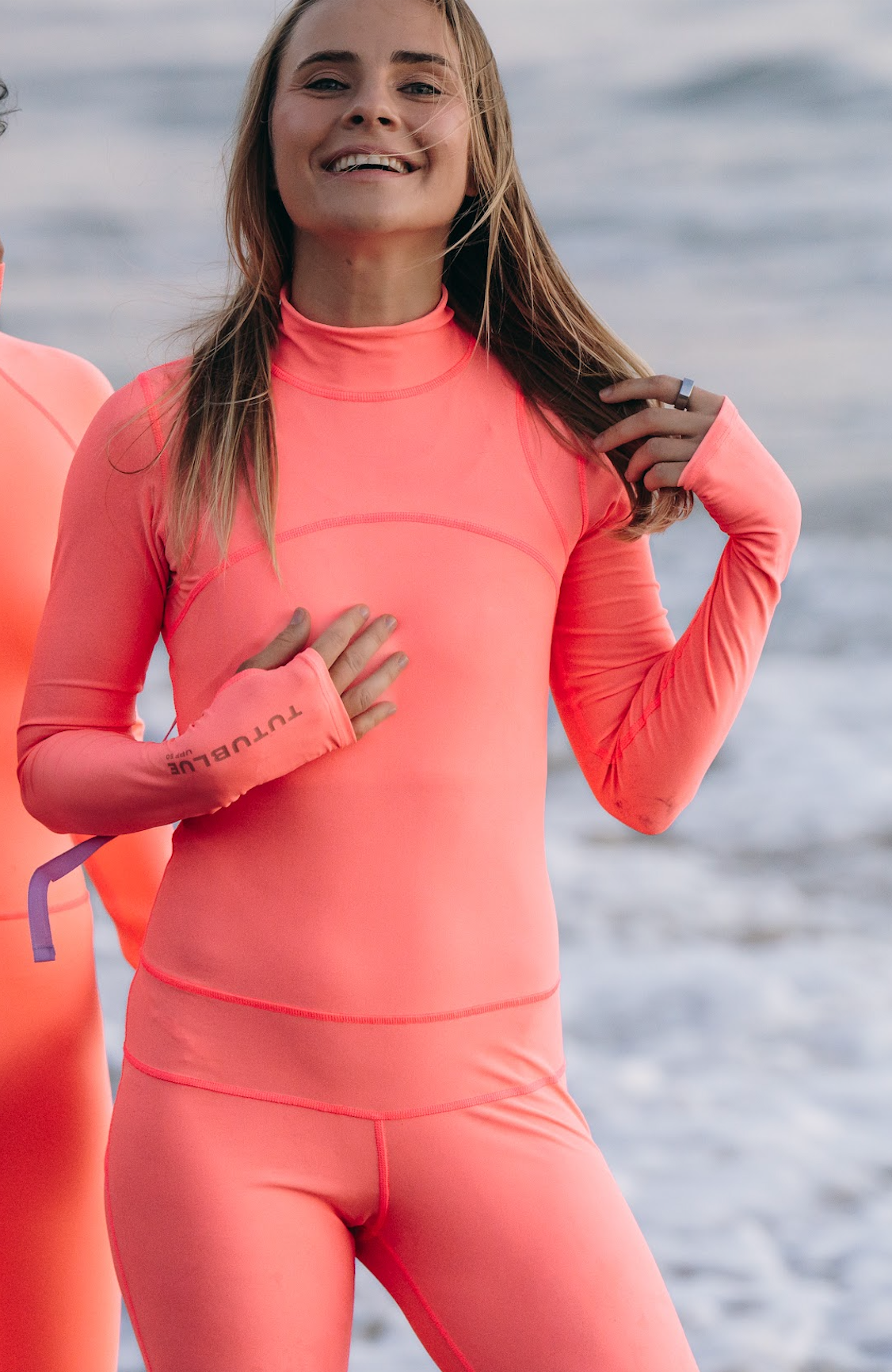
A full-body suit like our Classic long swimsuit in Coral covers more skin, so it holds more water than a two-piece. Its lightweight UPF 50 fabric is quick-drying and low-bulk, according to the listing. The practical takeaway: match your drying plan to the garment, not to a single number printed on a tag.
Use these ranges as planning estimates for a suit hung in shade with moving air.
| Garment type | Estimated drying time |
|---|---|
| Lightweight polyester rash guard, unlined | Roughly 20 to 40 minutes |
| Polyester-elastane one-piece, unlined | Roughly 30 minutes to 1 hour |
| Lined one-piece or two-piece with lined top | Roughly 1 to 2 hours |
| Full-coverage suit with long sleeves and legs | Roughly 1.5 to 3 hours |
| Thick, layered, or heavily lined suit | 3 to 5 hours |
| Cotton or cotton-blend top worn over a suit | Several hours |
Choosing a Quick-Drying UPF Suit for Your Next Beach Day
Pick a suit built from lightweight synthetic fabric, check the UPF rating, and confirm the care label allows easy air-drying. Those three checks do most of the work.
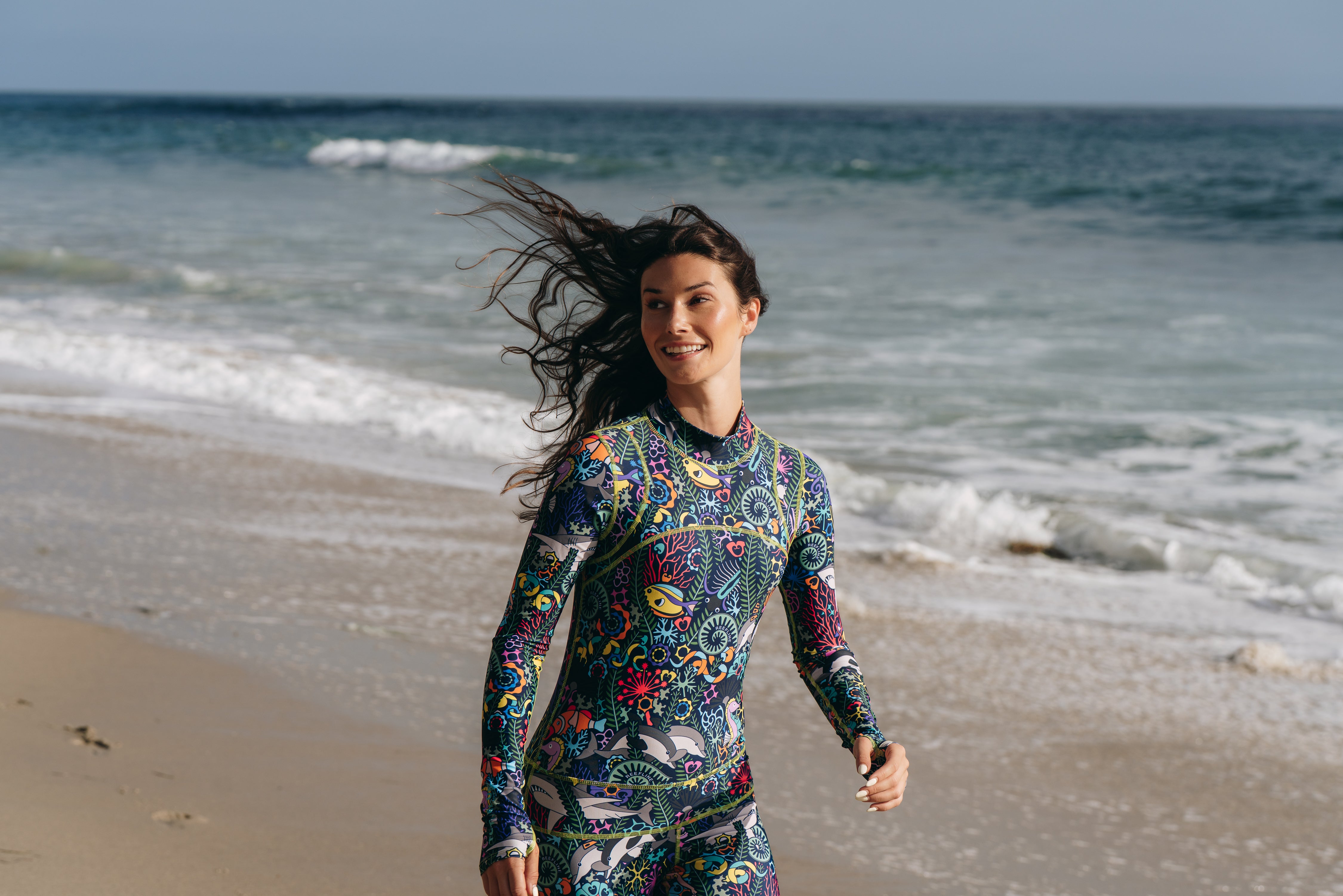
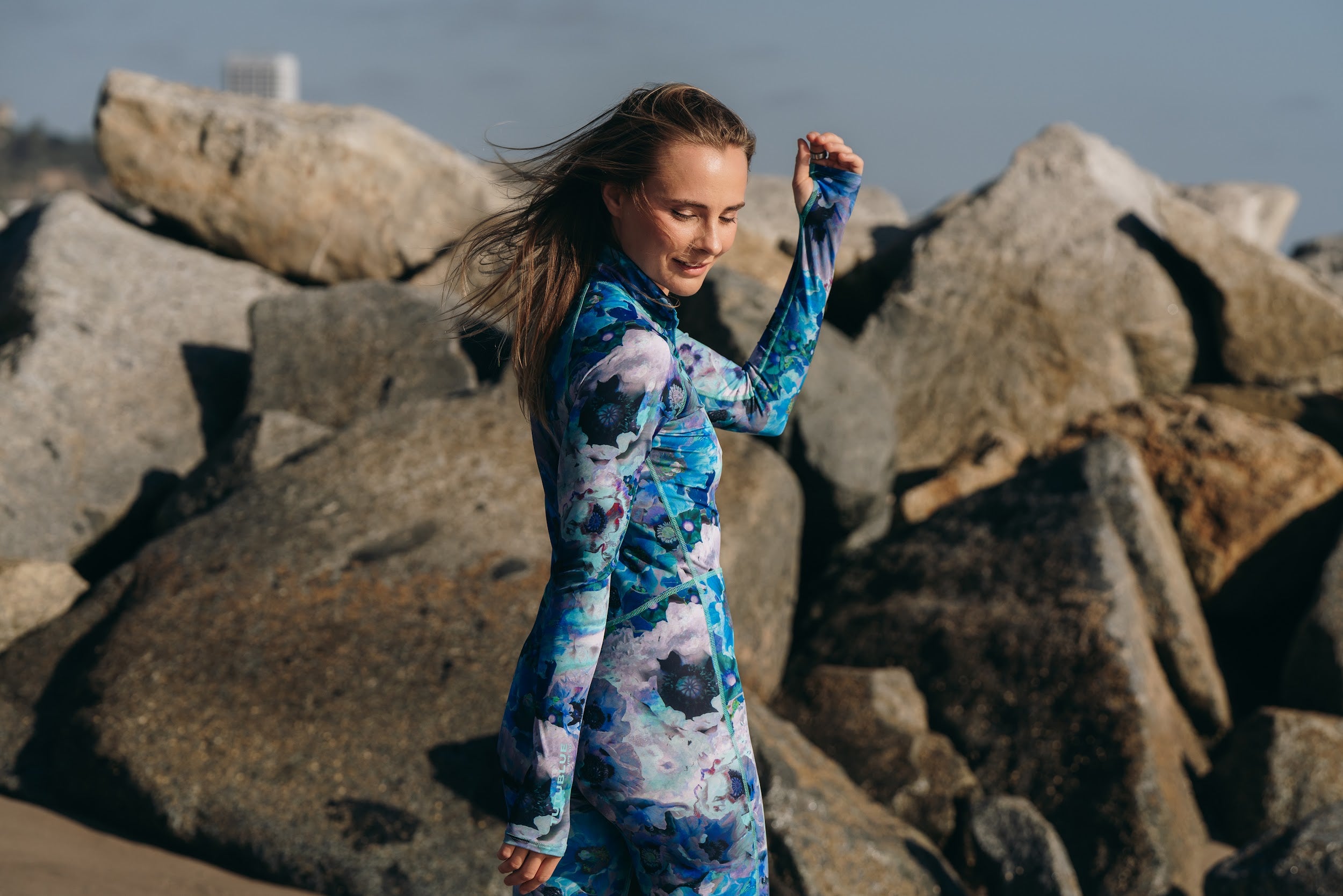
Our RORO front-zip swimsuit in Sea of Blues uses lightweight, breathable UPF 50 fabric and is designed to block 98% of UVA and UVB rays. For a printed option, the Reefline Classic long swimsuit pairs full coverage with quick-drying, low-bulk fabric.
Ready to shop? Browse our guide to the best UPF 50+ swimwear for women to compare fits and coverage.
Drying time is one more reason to choose your sun protection carefully. A suit that dries fast keeps you comfortable and back to full protection sooner.
Frequently Asked Questions
Does UPF swimwear take longer to dry than regular swimwear?
Not necessarily. Drying time depends on fabric composition, thickness, and construction rather than the UPF rating itself. Many UPF swimsuits use lightweight synthetic fabrics like polyester and nylon blends that release water quickly. However, full-coverage designs with more layers or thicker fabric may hold moisture longer than a minimal two-piece. TUTUBLUE's suits use lightweight, quick-drying performance fabric, but the brand does not publish a specific drying-time benchmark, so expect a range based on conditions.
What is the fastest-drying swimsuit material?
Polyester and nylon are generally the fastest-drying swimsuit materials because their synthetic fibers absorb very little water and release moisture quickly. Elastane adds stretch but can slow drying slightly when used in high proportions. Unlined, thin, dark-colored fabrics also dry faster than thick, light-colored, or heavily lined suits. For UPF swimwear, look for lightweight performance fabric blends described as quick-drying, and avoid heavy neoprene-style suits if fast drying is your priority.
Does wet UPF clothing still protect you from the sun?
Wetness can reduce a fabric's UPF rating, and how much protection remains depends on the fabric type and construction. Some studies show wet fabric provides less UV protection than dry fabric, but the exact loss varies. Wet fabric may not maintain its full UPF rating. For extended water time, choose a suit that fits snugly and covers more skin, and reapply sunscreen to exposed areas.
Can I put UPF swimwear in the dryer?
High heat can prematurely age elastane and damage the fabric's stretch and fit. TUTUBLUE's care instructions specify hang to dry away from direct sun. If you must use a dryer, choose the lowest heat setting and remove the suit while slightly damp. Air drying in a shaded, ventilated area is the safest way to preserve both the UPF performance and the quick-drying properties of the garment.


Leave a comment